I AM –
Sustenance. The risen bread of life.
The answer to infernal yearning; quenching burning hunger.
The fruiting tree which bears eternal – fractal branchings;
Rooting to such depths unending, imbuing still the least with sight.
I am resplendence coinciding yet the faintest light;
Transcendent of the night which beating hearts confirm.
A guide in darkness, calling forth, but not outside.
Alone without only the concept of loneliness, as One; Sovereign Truth.
I am the gateway alive in glory, through which you may yet find yourself;
No longer wizened, groping, listless limbs. No longer addled, ebbing sheep,
But at last endowed to affirm life; the living.
Revived. Renewed. Released.
Reconciled to existence both within and overlooking;
Understanding who you are is not ‘I am,’ but in ‘I am’ are we.
______________________
In case you were wondering just how big my ego has gotten these days, this poem is not about me. It describes God through ideas put forth in the Bible. As a child raised in a Christian family I was exposed to many concepts that in retrospect I didn’t understand, and some of which, in all honesty, I still don’t. God is a great example of a concept likely incapable of being understood. In fact, if someone says they know what God is, they may be confusing what it is to actually know something. Within our limited frame of reference it is quite nearly impossible to fathom a subject that is at once omnipresent, omniscient, omnipotent, irreproachable, and infinite. Just take the latter and attempt to grasp its implications beyond a figure eight. – Something infinite is boundless in space and time. It is not before and after time, it is outside of time. It is timeless, eternal, nonlinear; which implies a frame of reference within everything has already happened, all things past and future are happening at once, and/or innumerable quantum potentials are unfolding concurrently, etc.
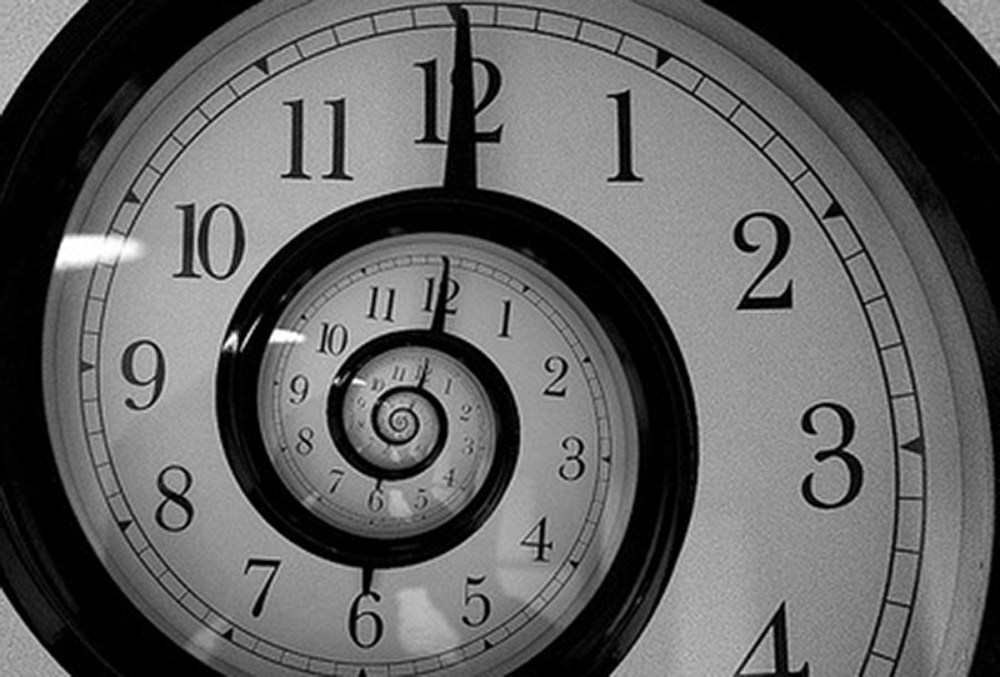
There is so much consternation and misconception around the subject of God, and its not difficult to see why. Since time immemorial man has often invoked the name of God for his own purposes; when it has been convenient, has suited agendas, for money, and for power. To this day differing concepts give rise to the spread of hate, to separation, judgement, and to war. Consequently, God has become somewhat of a four letter word in our culture; one people deny, and would prefer not to hear. At times conversations are a struggle as walls are drawn the moment the word is spoken. As a result, I have found myself searching for alternative avenues of description; terms like: the universe, energy, source, etc. These seem easier for some to digest, and in any case, act to keep conversations going.
Conversely, I have noticed many messages and individuals promoting a notion recently which acts to transform the mundane into the extramundane. The “I am” principle applied to the everyman. We are all god, gods or goddesses. This is where many who identify as Christian begin to feel uncomfortable. And while it is easy to flatly reject and/or deny something, one must realize that doing so employs the very mechanism which perpetuates utter lack of understanding and respect in both directions.
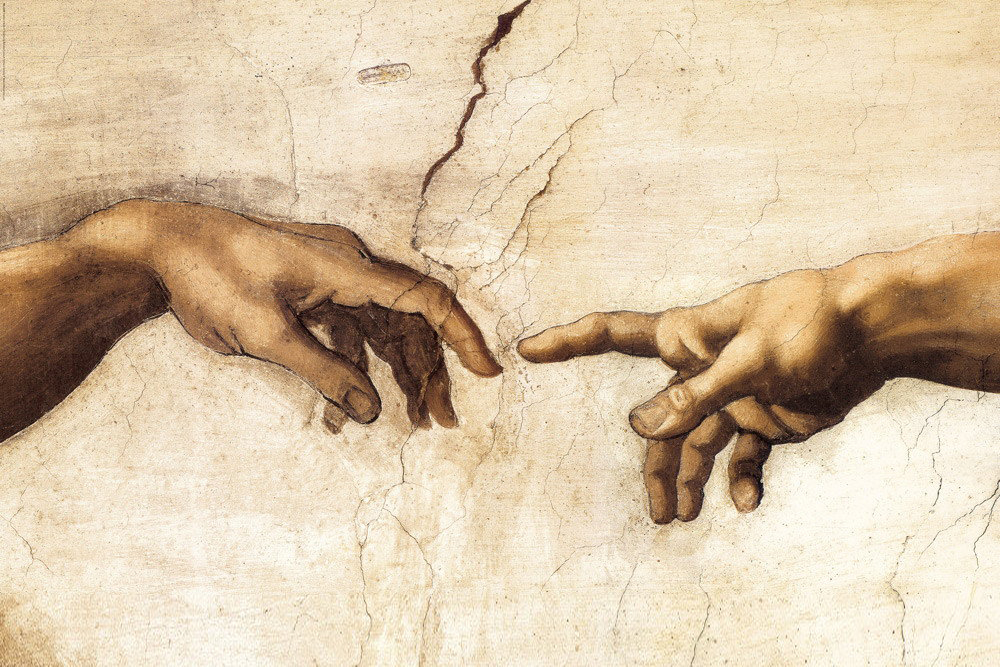
It is not our place to judge. Rather, it is our responsibility in this age to empathize; to evolve into a state where a desire to understand is not a last resort, and not second nature, but intrinsic to who we are.
I believe that in order to truly understand anything we must first come to better understand ourselves. It is through a lens carved from personal experience that we view the world, so to clarify the picture we must first recognize how and why our lens took on a particular curvature, and then find the humility and tools to reshape where necessary.

Self analysis isn’t easy, it isn’t always comfortable, and is not something that our society promotes. As a result, most of us lack awareness of appropriate methods for undertaking such introspective work, and don’t attempt it because it seems too difficult to start. The reality is that it doesn’t have to be as hard as it may sound. We can begin by taking a few moments to enact simple exercises like the one below. With the proper focus we can elucidate a greater perspective on ourselves and those around us. This is the basis for continued growth and understanding.
______________________
Look around. What do you see? A tree, a chair, a car. Inspect the object for a moment, and consider it fully.

If its a tree, see its roots reaching far into the ground, anchoring it to the earth, drawing in nutrients and moving them through its trunk, its countless branches, needles or leaves. Consider the number of growth rings present in a cross-section of the trunk. Imagine how many years its been there, the storms it has weathered, the sunny days it has taken in; how much carbon dioxide it has absorbed, and how much life giving oxygen released. Think of the number of insects and other creatures that have called it home, and consider where it all started; a single tiny seed.

If it is a chair, consider its color and texture. Imagine how it feels to run your fingers across it. Is it cold? Is it soft? Think of its purpose; to support anyone or anything resting upon it. Trace a path back to its source. The store it was bought in and the person that makes their livelihood selling others just like it. Think of the processes, artisans, and materials involved in its construction. If it is a wooden chair this leads back to the consideration of the tree and everything involved in the previous example. How many lives did the chair touch on its way to its current position?
Its incredible to see how an object transforms once its considered in this way, and even more so when we extrapolate that inspired understanding across the multitude of objects in our environment. Effectively anything can present us with a similar amount of information, and ultimately with an opportunity to learn. While it is possible to whittle nearly everything to a subject of necessity for another person or living being, typically an object’s representative value is a product of personal perception; it is derived from our thinking. Taking part in an exercise like this one can lead to an enriched appreciation of our surroundings as well as a greater understanding of ourselves. The questions which arise in the process become: How do I relate to these things?, and, What are their significance to me?, ergo, What do I value?, and Why? The answers we find will tell us a lot about who we perceive ourselves to be, and can deepen our search for understanding of that which extends well beyond a concept of self.
 We Are Nonlocal