At five a.m. the older of the two caballeros turned on his lamp and began knocking around in the cabin. It was only thirty minutes before we had planed to get up, but out of principle I had to insist he quiet down and extinguish the light. After some convincing he did, but it was too late. There was no going back to sleep, so we packed and got out of there as quickly as possible.
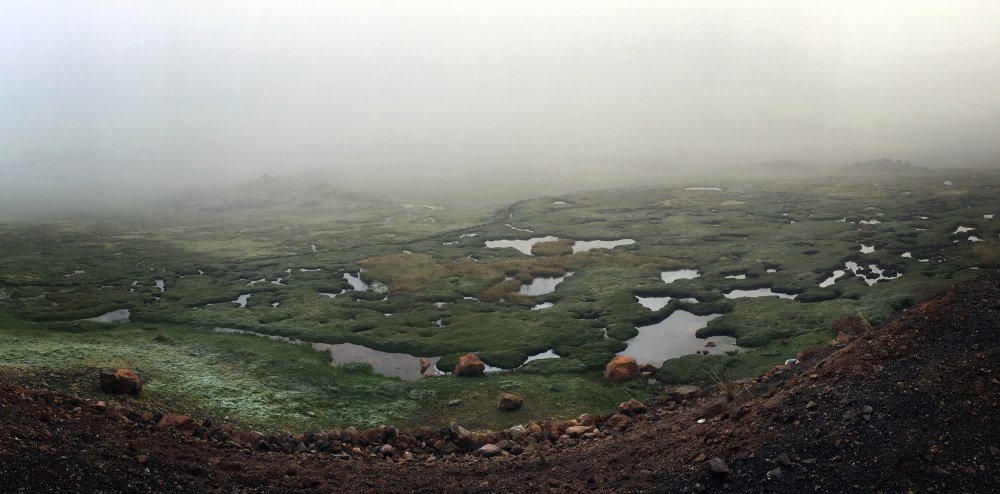
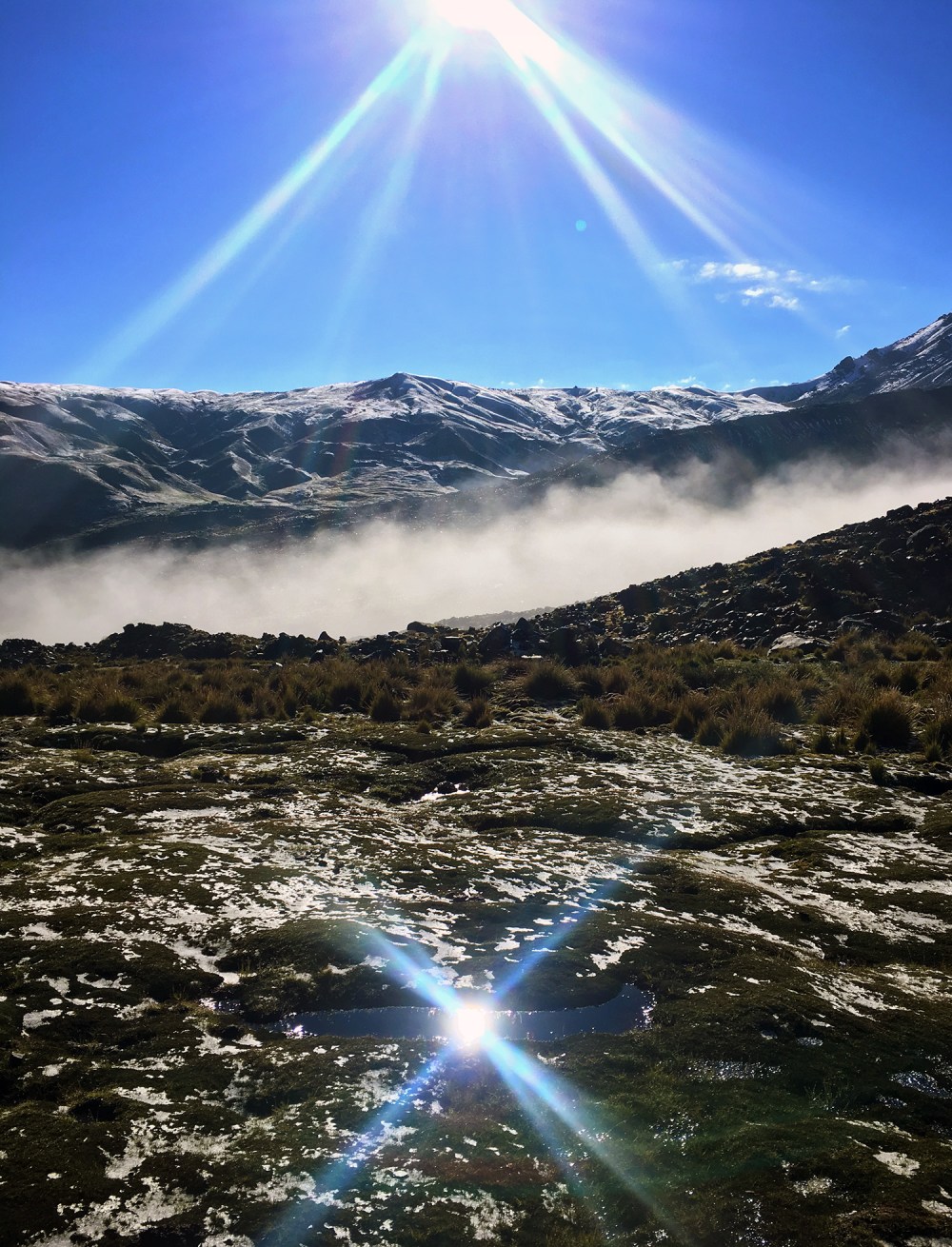
Columns of steam from countless smoldering springs and clouds hanging heavily overhead limited our visibility to about fifty yards this frosty morning. Ice which had accumulated on the ground broke under our feet as we tracked through tall grasses toward a muddy path yellowed with sulfur that would lead us out of Upis. Good riddance.
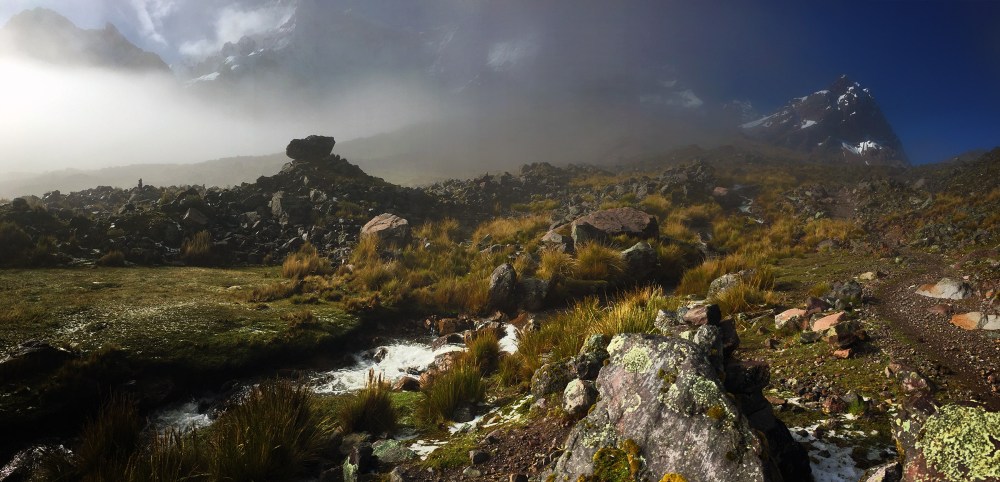
When the sun began to clear the clouds and cut through the frigid cold we stopped for breakfast, just before the path turned gradually upward toward one of three official Abras, or mountain passes, we would ascend during the trek. After filling our water in a nearby stream we passed a lama farm being watched over by a family of four. Two small children ran out to inspect us from a distance, responding to our calls of Buenos Dias! and Como Estas?, Good day and How are you?, with only inquisitive stares.

The intense sun transformed the frosty path into thick mud as we climbed, allowing the Spaniards and Caballeros to arrive at the abra almost simultaneously; their gear toting steeds in tow.

The pass was marked by a small stone on which its name and elevation were painted: Abra Apachiti, 15,590 feet. This meant that we were standing approximately a thousand feet higher than any peak in the contiguous U.S.; a fact that became more awe-inspiring looking up at Asungate’s summit looming 6,000 feet above our heads.
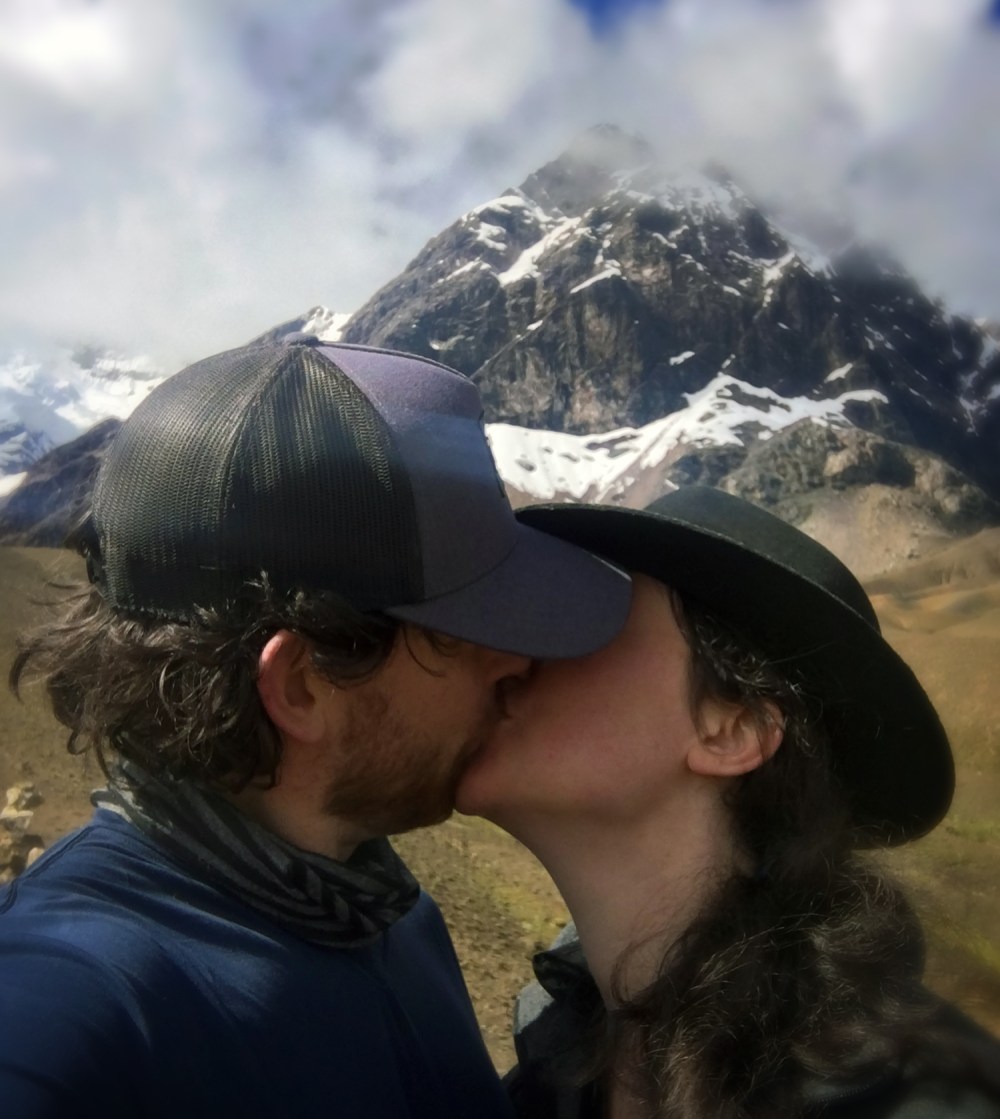
The thin air limited vegetation to small pockets of moss and left the remainder of the area barren. The trail? It was impassible shoe stealing slop due to the weather of the previous day. As a result, we began zigzagging the landscape, avoiding the mud and navigating around large chasms that ripped through the undulating surface.

The arid abra’s soft curves turned to sharp slants of fractured shale after rounding the final hill, so instead of following the treacherous track we decided to descend a dry gulch to the valley below. The rift dropped us lower in the canyon than expected so we found ourselves hiking back up to meet the trail at a pampa, or grassland, held between two adjacent peaks.

The beryl range consisting of dense moss gathered into bulbous cells floating on top of small but deep ponds had us acting out a game of Pitfall as we bounced around on the bobbing beds. Having heard stories of locals burning dung instead of wood due to a deficit in the area, and considering our current lack of fuel, Mel collected dry samples to use that night. (And I have the pictures to prove it!) Me? I’ll be honest. I stuck to harvesting dry grasses and small roots that had succumb to drought in lieu of the pooh.
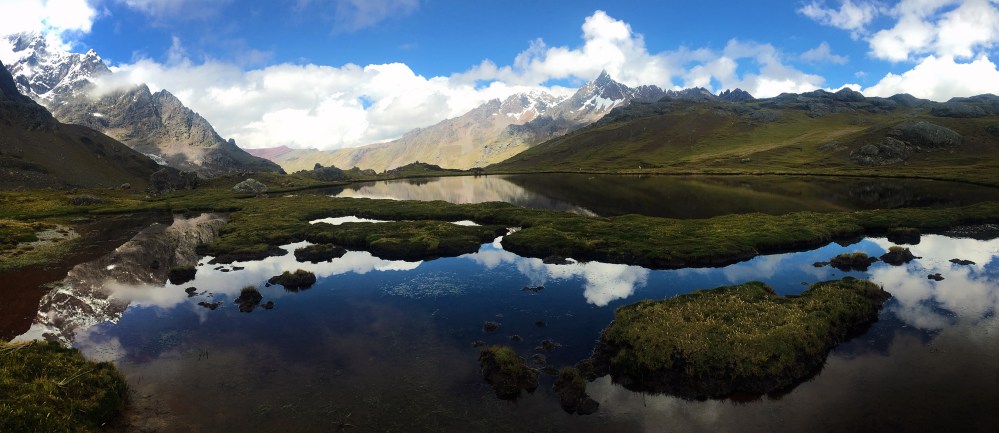
The beds of moss curled around perfectly still ponds reflecting the surrounding peaks, led through a field of boulders where chinchillas squeaked and scurried out of sight, and up to a mirador where we lost the trail completely. We noticed a couple in the distance to our right, but had to assume they were on a completely different course due to the sheer rock faces and massive glacial lake that stood in opposition to a pursuit. Instead, we traversed an expanse of large rocks to our left dropping steeply to the water’s edge, and climbed up alongside a wide cascade we had called all-in on our ability to cross. Our gamble paid off when we reached the top and found a small wooden bridge spanning the raging waters.
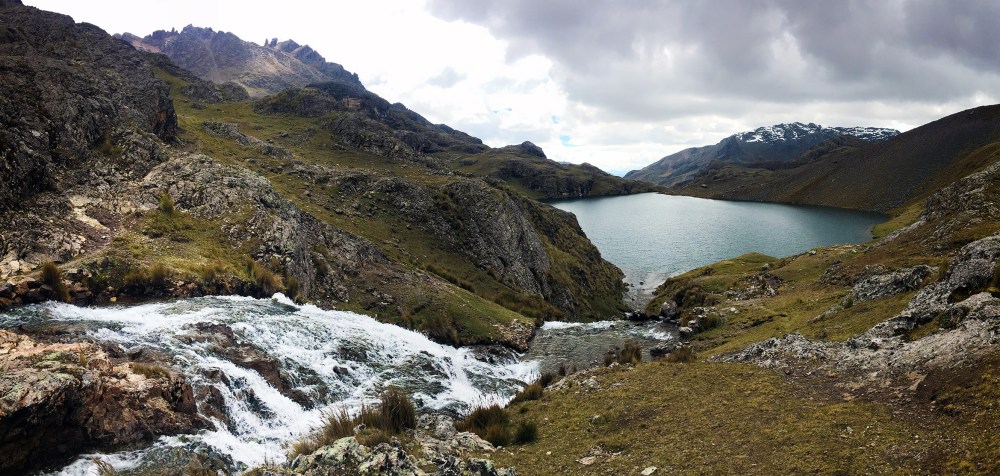
After crossing we were met with yet another choice-point. We could move around the large peak in front of us toward the middle of the lower lake where we had seen the others, or we could go up and over in hope that the other side would ease to the banks of the higher basin. We chose to climb; a decision that would require us to scale a wall of jagged stone about half way up. After a successful start, and just as we were congratulating ourselves on our bold moves, we ran out of land. The mountain had dropped away, leaving only inverted cliffs upon which we now stood gazing longingly across the inland sea.
At this point backtracking was not a favorable option, so we composed ourselves and started up another section of granite. I went straight up the escarpment while Mel attempted to ascend a steep fissure to the side which had widened through erosion and filled with grass. At the top there was no sign of Mel, and even after climbing down along her chosen track she was nowhere to be found.
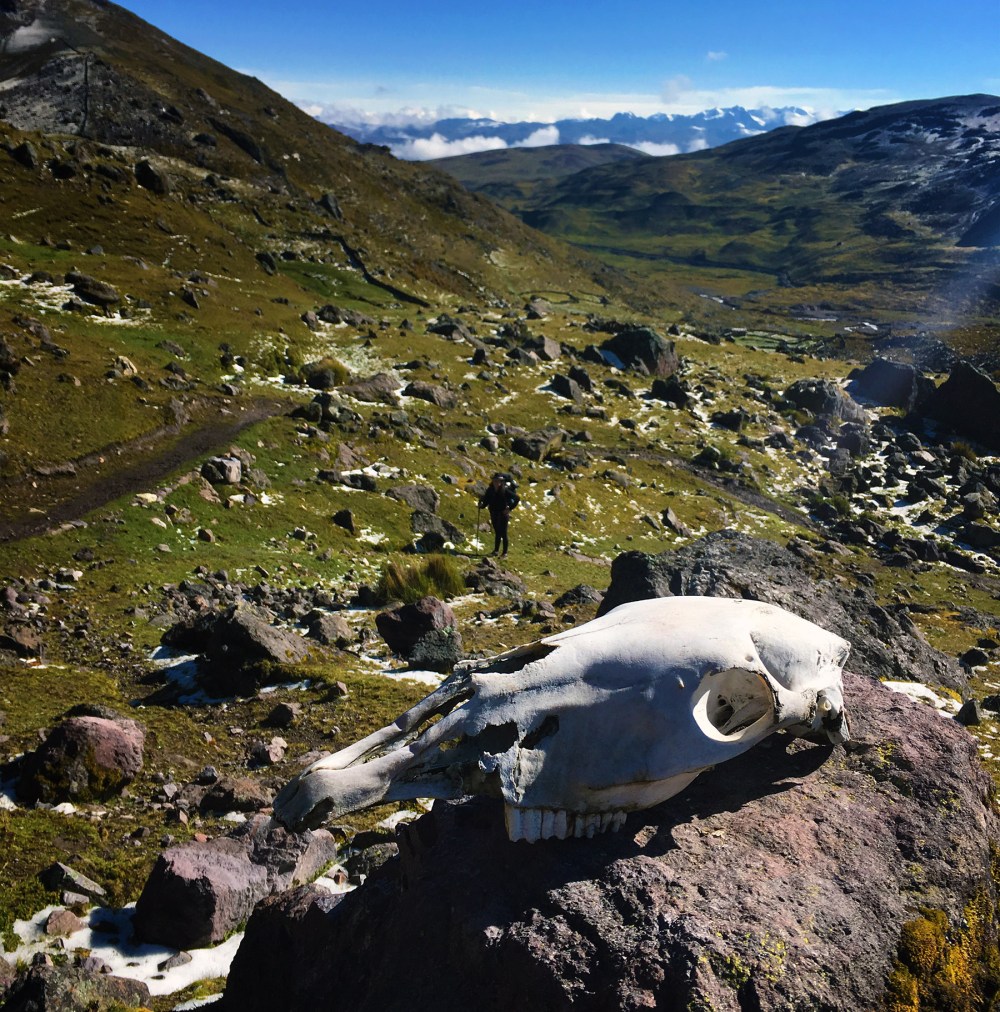
The crevice had become increasingly abrupt and she had frozen in fear while hanging somewhere on the rocky face. Her body clenched, refusing to move. She tried to calm herself with deep breaths to no avail. Remembering a tip from our friend and avid climber Jerrica, she cautiously began to move laterally into a workable position, and finally pulled herself to the crest. From that moment forward any sketchy situation that presented itself would be met with the question: (WWJD?) What would Jerrica do?

The mountain took on a gradual slope after that, eventually turning to rolling hills that spilled out in front of a campsite spied from our perch over the lake. We decided to settle just a few hundred yards away and started to prep a fire using the various fuel sources collected hours earlier between sporadic rains. Thankfully, after about twenty minutes of failed attempts with the moist kindling a guide from the nearby campsite came to our rescue, assessing the situation, and then gladly offering boiling water from his site. Thank you Alipio!
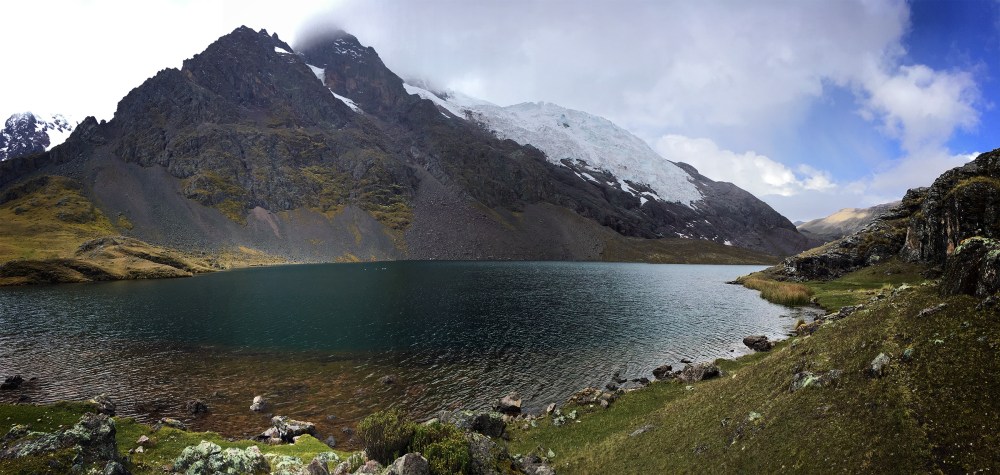
We were so grateful for a warm meal after such a long and arduous day, and even more excited for those to come. What could possibly top this, we thought to ourselves as we tucked in for the night. Surely it will be smooth sailing from here.
 We Are Nonlocal