Just before dawn we tromped drowsily down to Plazoleta San Blas which was all but deserted at this early hour and hailed a cab to an obscure station where we would board a public bus for the Oncongate region of Peru. It was 5:55 am when we broke away from the terminal, our transport virtually empty of passengers yet teeming with our excitement for the journey ahead. Climbing hills leading out of Cusco, we turned easterly to face the first sliver of sun rising from behind a shadowy summit, its incandescent glare transmuting the oscuro sky an illumined blue veiled in vanilla haze.
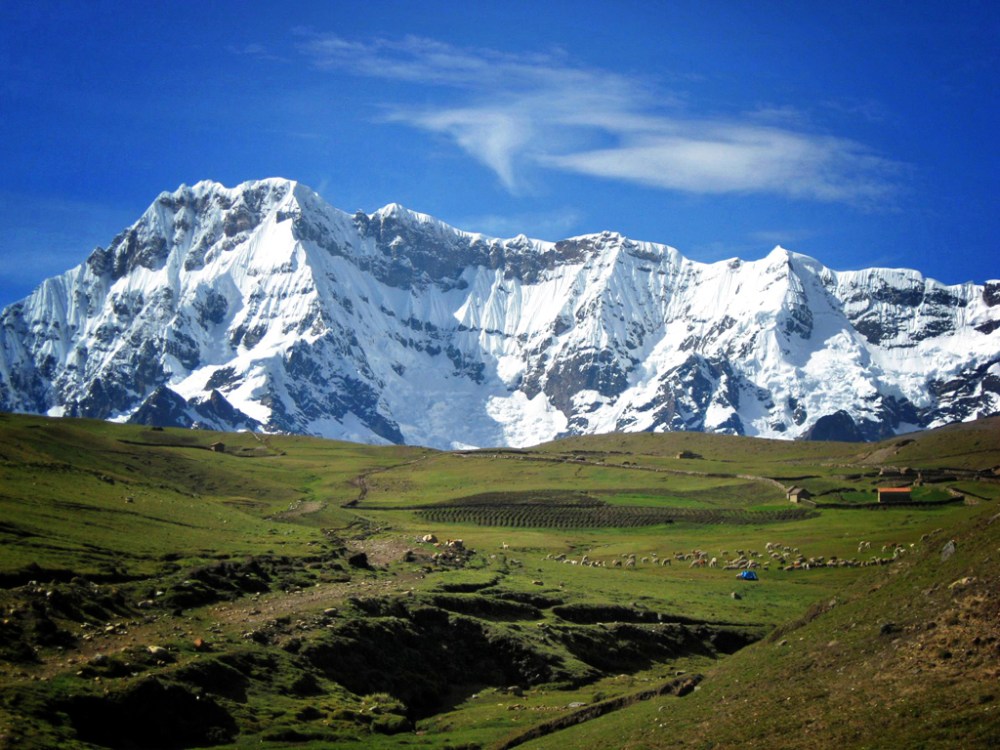
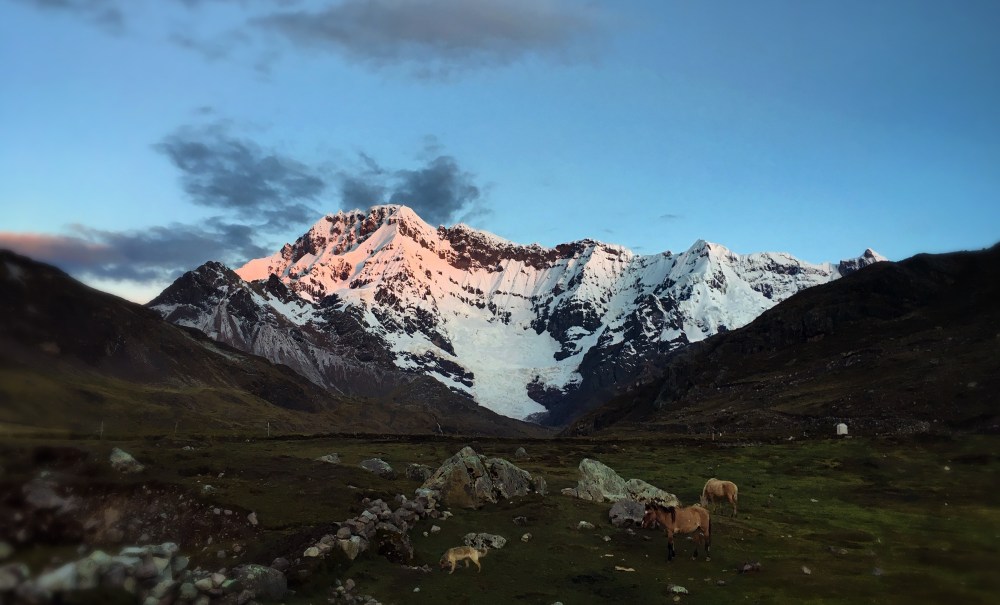
The miles passed quickly, just as dreams from the night before, but somehow our progression through space and time revived the visions held within our minds-eye, manifesting them in vivid scenes of pastoral fields and snowcapped peaks now before us. Plump bakers hoping on and off at every paradero tempted passengers with aromatic pancitos as we approached the small puebla of Tinki, the starting point of our journey through El Nevado Ausangate. Heaping into the atmosphere just shy of 21,000 feet the majestic mountain is the fourth highest in Peru and is revered in Incan cosmology as the embodiment of Ayni, or reciprocity; a give and take relationship that permeates the natural world and ultimately reveals the connectedness of all things.

In Tinki we hired a cab to take us to the rural village of Upis which lies well out of reach of the newly constructed highway in the region and stands in testament to a simpler time.
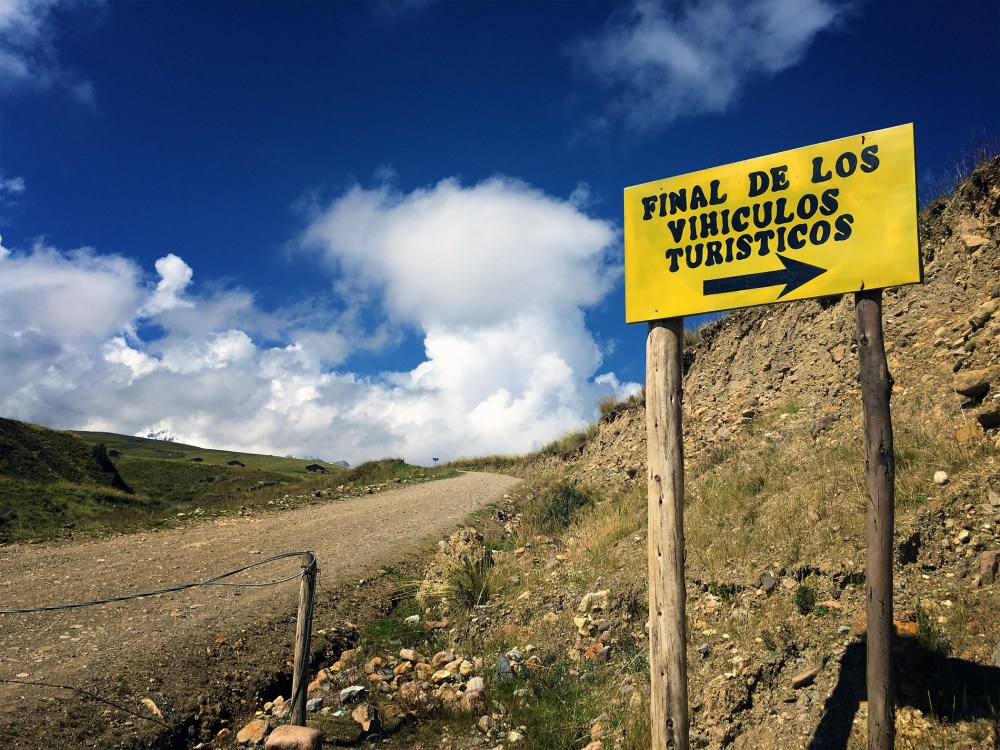
We barreled over rutty dirt roads for nearly a half hour, our driver stopping abruptly at a barricade marked “Final de los vihiculos turisticos,” the last stop for tourists, where we set off from the cab and were confronted by a local on bicycle who asked to view our boleta, or park pass. After a nod and a smart smile he pointed the way and then shuffled after us asking for una propina, a tip for his efforts; something that would become a theme throughout this trek.

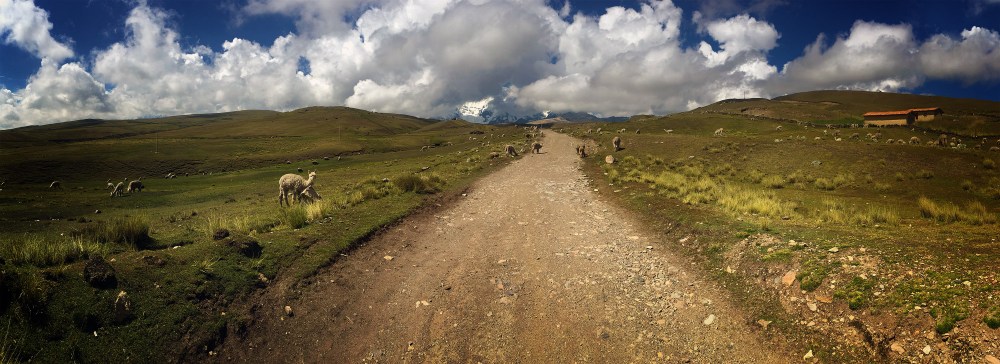
Thinking several hours would need to be regained as a result of the roadblock we picked up the pace and soon came upon a sign marked Poblado de Upis. This should have been cause for relief, but instead we were confused as our map located the village many miles further along the dusty throughway. Approaching a collection of tiny cabins worn with exposure and age we noticed a woman of similar condition tending a flock of sheep. As we drew near she began yelling something in Quechua which gave us the impression she desired us to move along quickly. So, that we did, down the eroding path that followed a culvert of running water begging us through the bucolic valley, closer and closer to Ausangate. Each twist in the route revealed groups of alpaca shorn to various lengths that would look up in unison with a curious gaze, their puffy checks seeming to turn up smiles as we snapped photos in passing.
A short break ended as the sun slipped behind the clouds and tiny specks of sleet turned to hail that pelted us relentlessly as we fumbled for protective gear. The barrage of biting bullets quickly proved our implementation plan was not quite at its best – lesson learned. We had no choice but to continue, our heads tucked into hoods, staring down at the frozen rain collecting at our feet, until we reached a second sign telling of our entrance into the village of Upis. Huddled under a forgotten stable to check our map we were both relieved to find we were finally to the marker, and distressed by the storm developing around us.
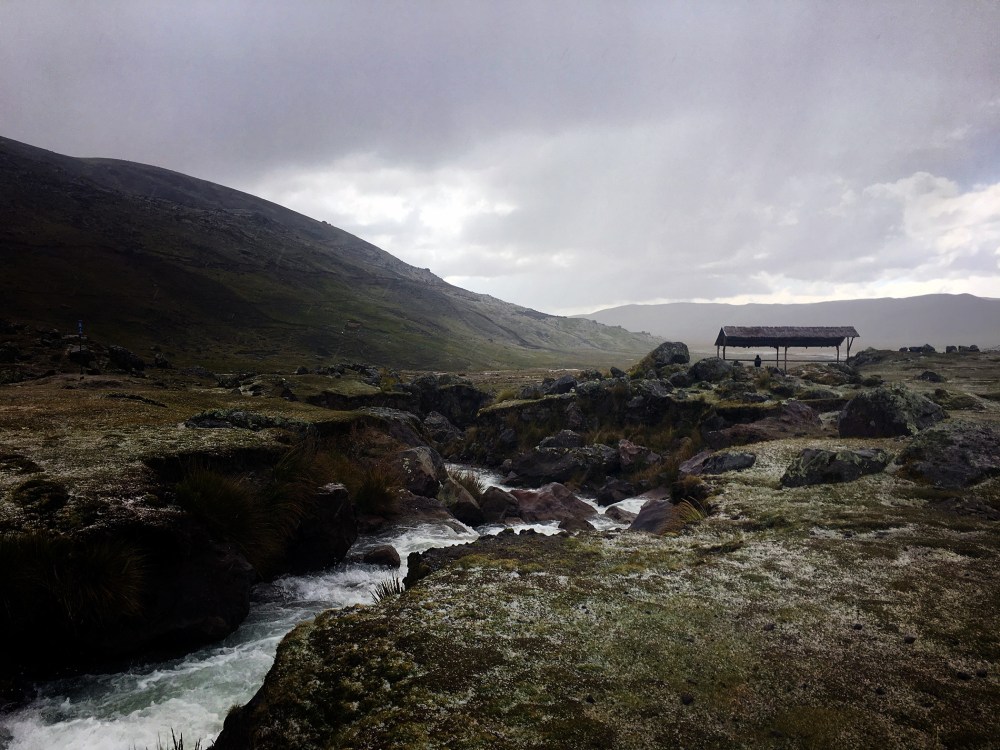
We began combing the small hamlet for shelter from the unbearable cold when we were startled by the appearance of a homely man at our side mumbling “vamos,” we go, and motioning for us to follow him to a nearby shack. The building of mud brick and earthen floor was completely empty save two thin mattresses at one end and a small table near its center. The man folded over on one of the mattresses in an attempt to stay warm as we stood thanking him for his generosity and making small talk in Spanish through chattering teeth. We boiled some coca tea and offered a snack to our host who talked of hot springs only a couple hundred yards away that were inaccessible in such conditions. As it turns out, he was the “caretaker” of the property and was interested in us staying the night for a small fee. We begrudgingly agreed after determining that the weather was not likely to ease before nightfall, paid the man, and began to organize our things after he hobbled up the hill to his home.
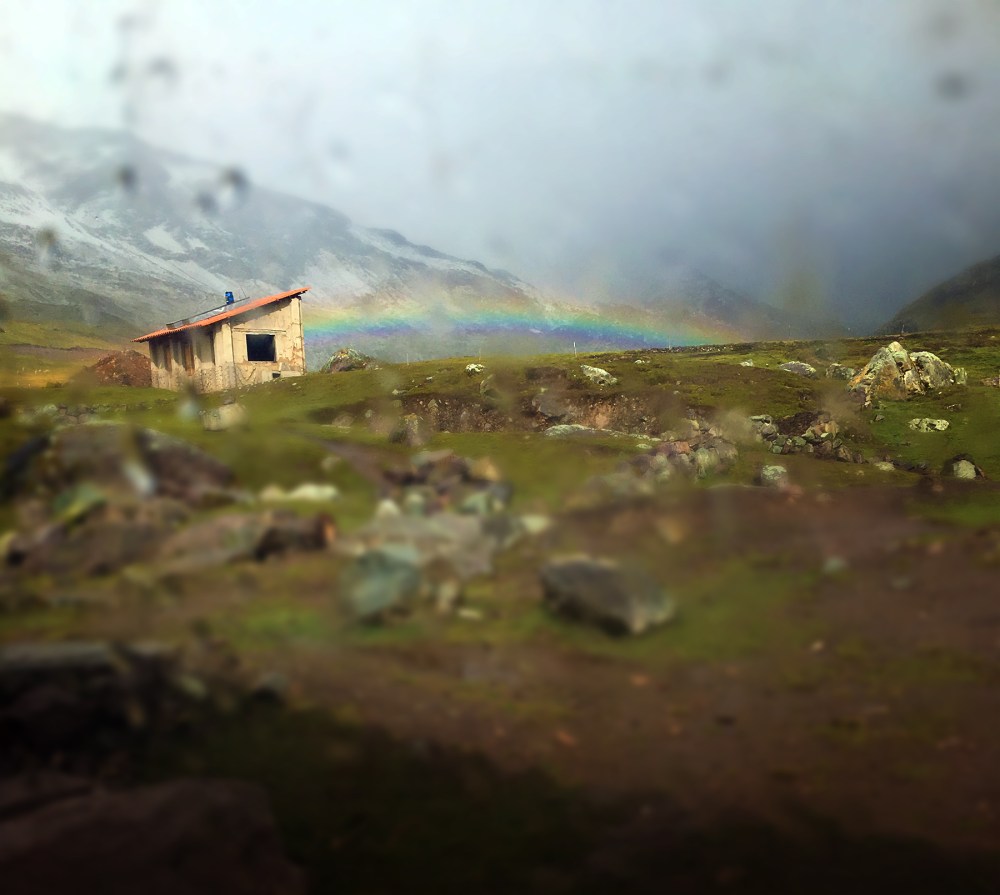
Fortunately, the storm quieted enough for us to check out the thermal baths, but they were in such disrepair we quickly returned to the cabin to cook dinner. We placed a pot of pasta over our gas stove, stoked the flame, and watched in horror as the blue jet dwindled to a flicker and finally sputtered to nothing. It was obvious we failed to swap the empty gas can with a new one now waiting our return on the counter at home; a fact that would undoubtedly add a level of difficulty to our journey. Undeterred, we carried the frozen mixture down to a small open spring which billowed with steam and smelled of sulfur, but that bubbled almost boiling water from its depths and would act as our stove this icy evening. Twenty minutes later we happily ate our warm meal and then covered the mattresses with a tarp to avoid any undesirable accumulations, before settling into our sleeping bags to plan the coming day.

Our session was disrupted by two caballeros, or horsemen guides, who barged into the cabin and began setting up a kitchen behind a hole ridden canvas where they would cook a meal for a Spanish couple who hired them for the trek. Afterward, the men pealed back the tarp and fashioned a bed just feet from the one we had made. I was admittedly annoyed to have paid for a room we were apparently going to share, but Mel ensured me that there was the prospect of a warm breakfast in the morning, so although it was still quite early we drifted softly to sleep.
 We Are Nonlocal