Today we would finally step foot within the walls of Machu Picchu, and while this would be the first time, it would not be the last. Soon after the trip with Kristi we returned with friends and family from the States, Rachel (Melissa’s sister) and Ahren. In order to access the ruins on both occasions we had to go through the gateway to Machu Picchu, a small town and tourist trap known as Aguas Caliente’s. This stop is unavoidable unless you trek in, and to get there you must take a large commuter train directly from the Sacred Valley, or ride a smaller one in from a place called Hydroelectrica.
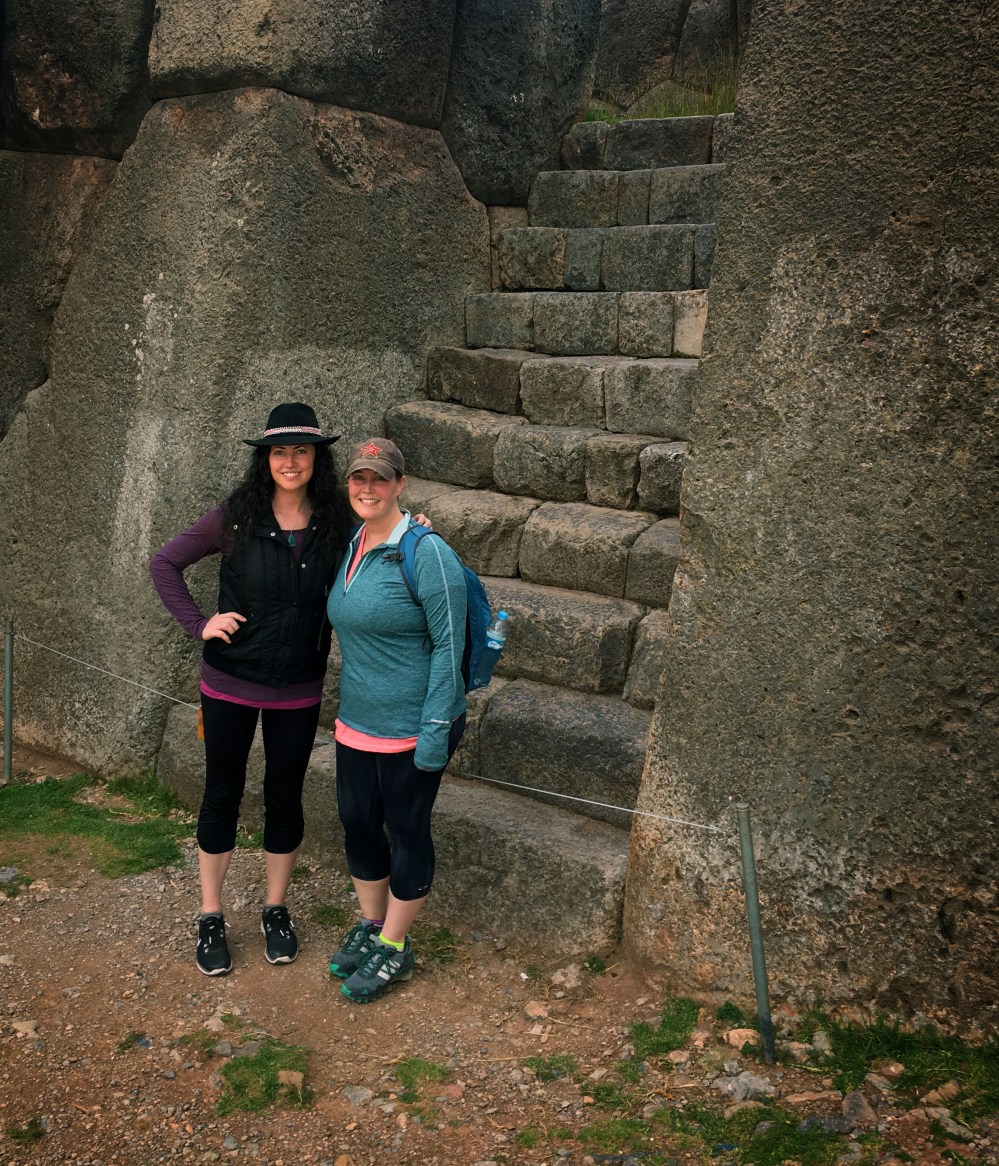
With Kristi we hired an early van from Santa Teresa to Hydroelectrica which sits at the foot of Machu Picchu Mountain on the side opposite Aguas, and is so named after a hydroelectric power plant built straight into the sacred summit. Yes, that’s right. In a veritable sea of peaks lining the Urabamba river, the one holding the most important ancient ruin in Peru was selected to hollow out for such invasive infrastructure. But it doesn’t stop there, the area on which it was built is also the home of two major fault lines.
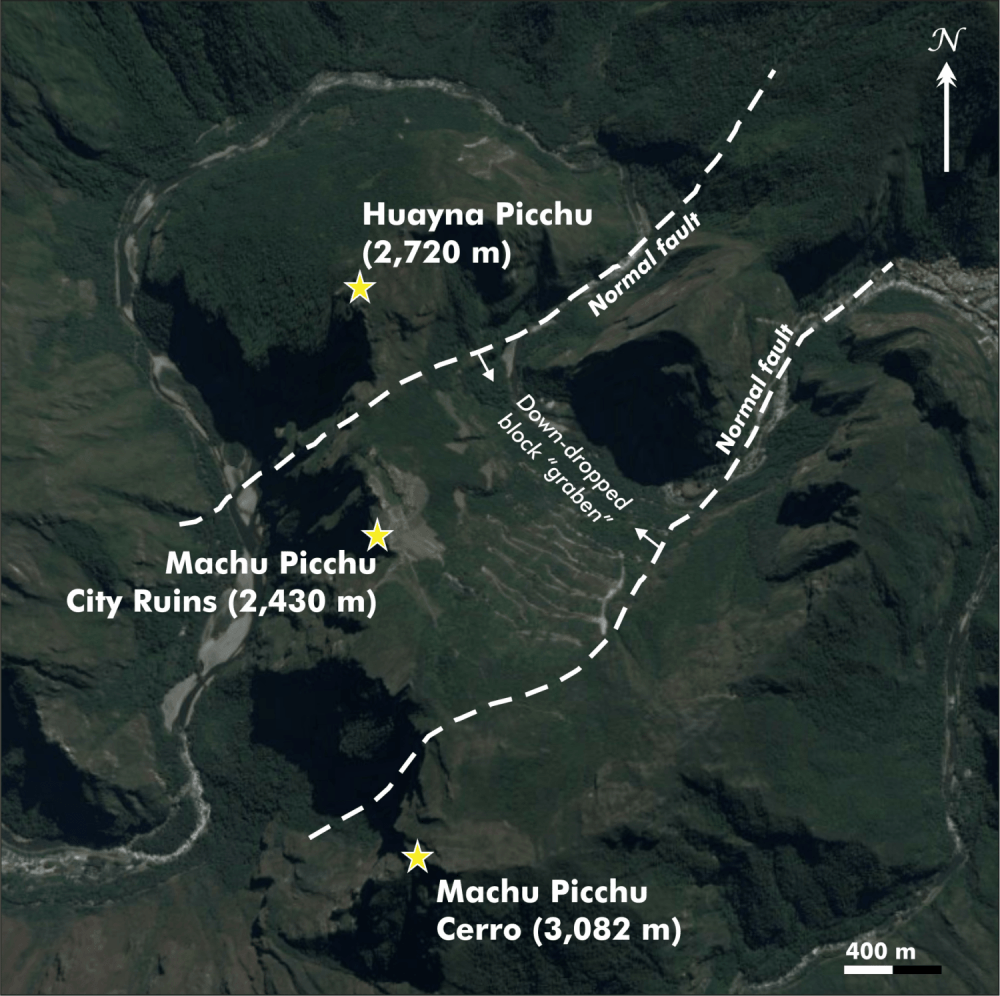
In fact, Machu Picchu lies just inside a natural feature called a graben; a wedge of land between parallel faults that have separated it from the two abutting landmasses causing it to sink under its own weight. On a top level it just doesn’t seem like the best location to construct a power station, but I’m no expert, and there it sits under heavy guard by an AK wielding staff who live on site in military style barracks behind towering fences. And while there is absolutely need for security at a power plant; the location guys…the location. It causes one to question.
Regardless, from Hydroelectrica we jumped a train to Aguas. Upon arriving we ate breakfast and then piled into a bus for a twenty minute ride up winding switchbacks to the top. Quickly passing groups of people gathered near the entrance, we followed a wooden pathway around a fold in the rock. With each step a rising excitement propelled us closer and closer to our first glimpse of the fabled citadel, and when the edge of the ridge gave way our vision was taken by the most incredible vista.
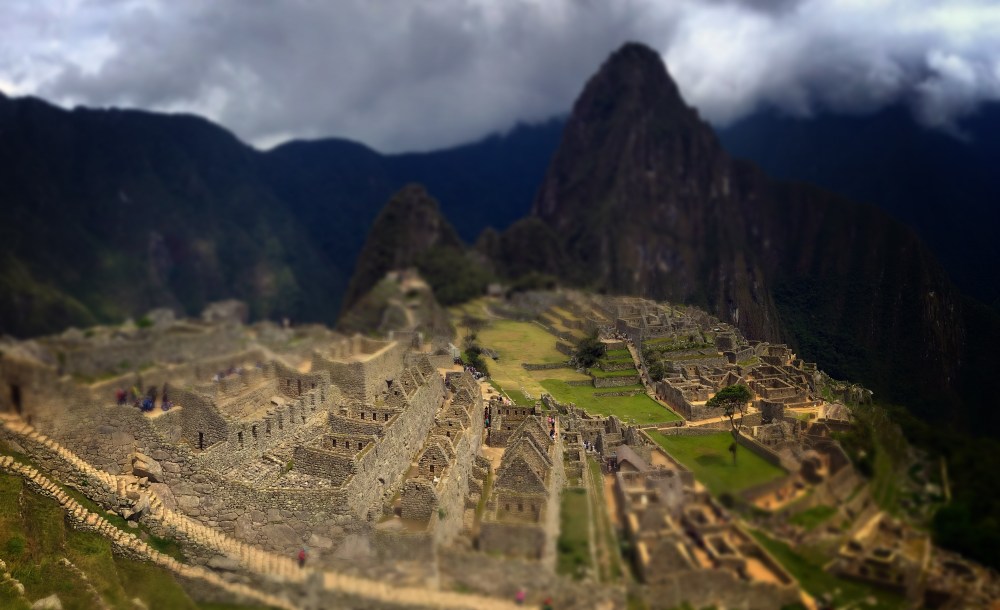
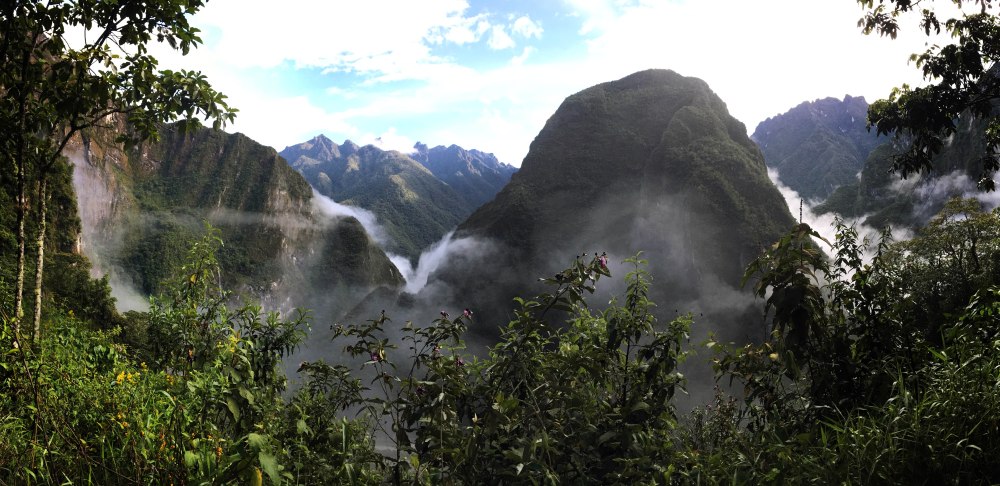
The entire site was surrounded by hordes of the most foreboding but beautiful peaks growing so sharply from their foundations they would appear as almost unbroken swirls of contours on a topographic map. In the distance, stone structures clinging to the cliffside were held together by thick swathes of white cloud, and within the city a latticework of stone walls and green lawns stretched across the landscape and out of view.
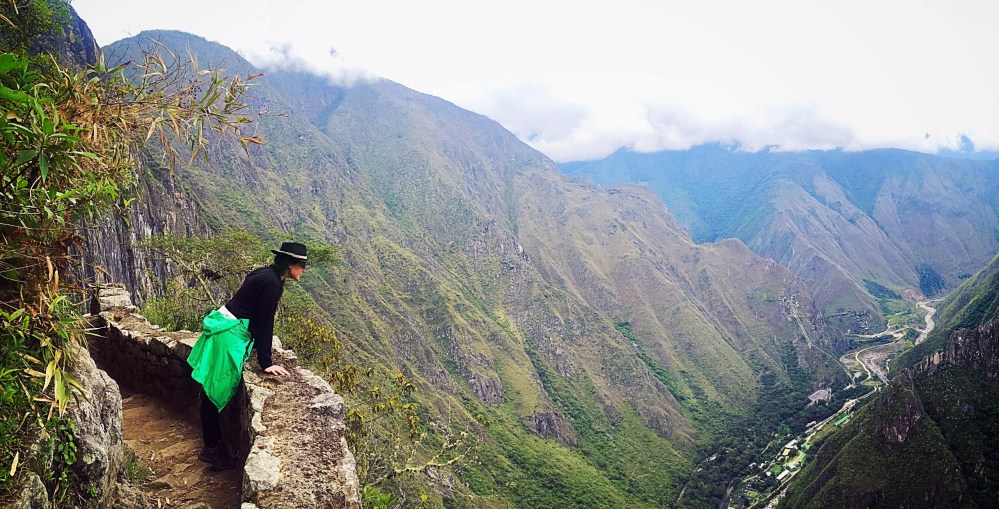
To gain a perspective from the top of the city we took a long stair to an overlook above the main site, and then a path carved from the cliffs called the Inca Bridge around to the southwest side of the mountain. Upon returning we leisurely explored the city complex, spending a good portion of the afternoon simply taking in the majesty of the site and surrounding mountains.
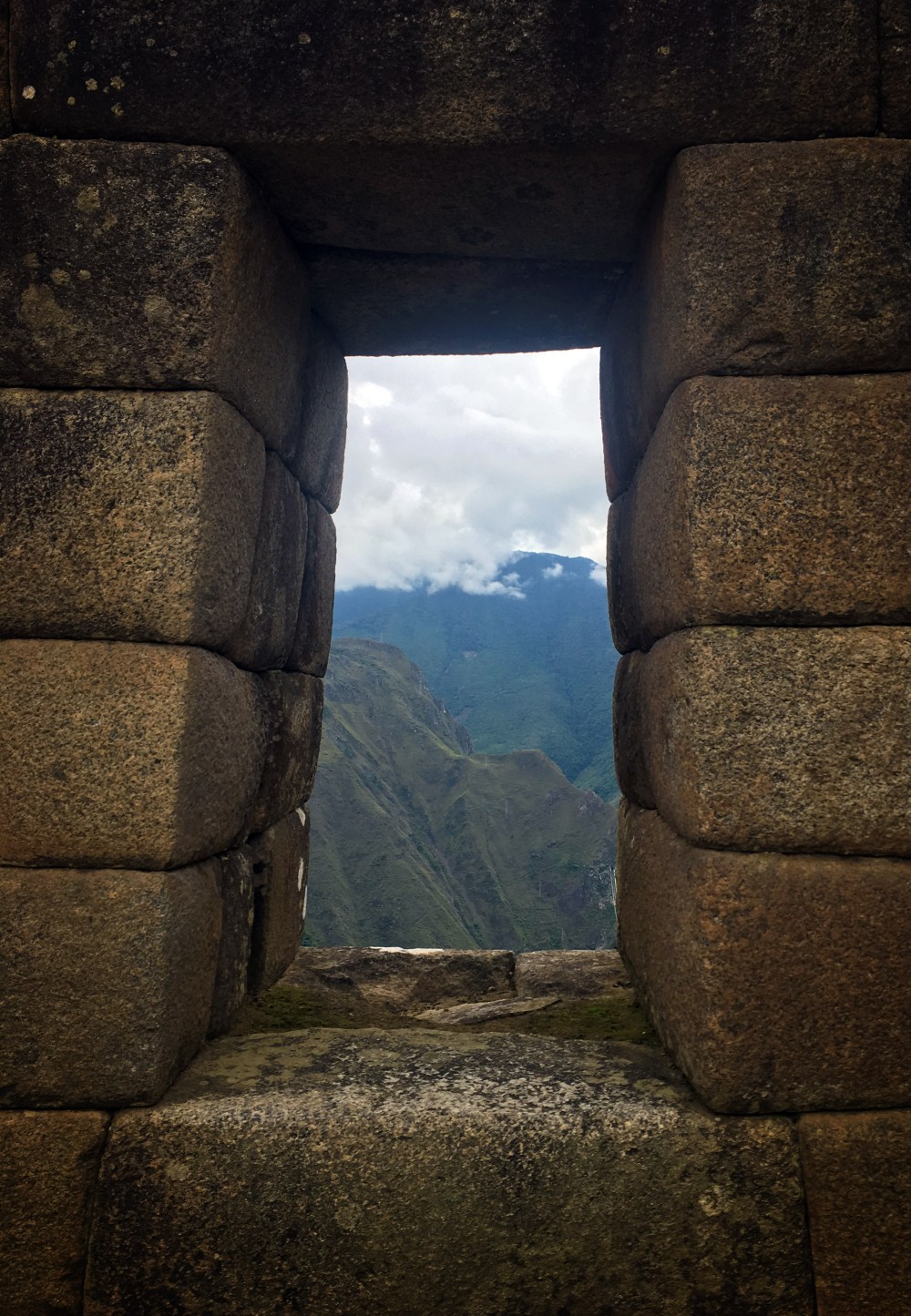
In contrast, Rachel, Ahren, and I took the train in from Ollantaytambo and then decided to hike up to the ruins from Aguas along a steep stone staircase that not only stole our breath, but also some of our time within the walls.

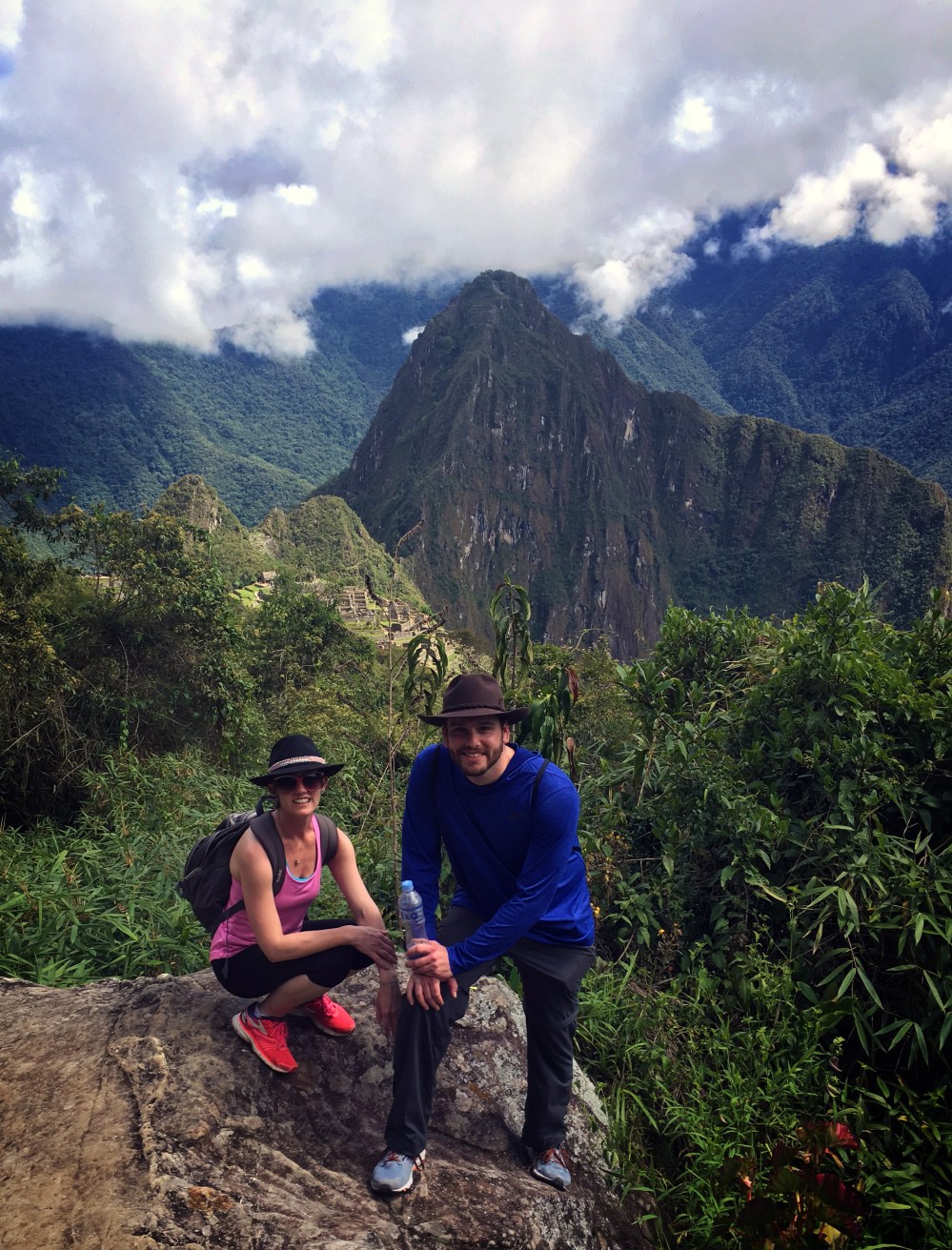
After our grueling morning haul we chose to trek again up to The Sun Gate which is perched hundreds of feet above the main ruin, and happens to be the entrance for those hiking the Inca Trail (something Mel and I want to work in soon). The detour was worth the 2-3 hours as it opened to some of the most incredible views yet, but because of the extra effort we didn’t have as much leeway to explore the city.
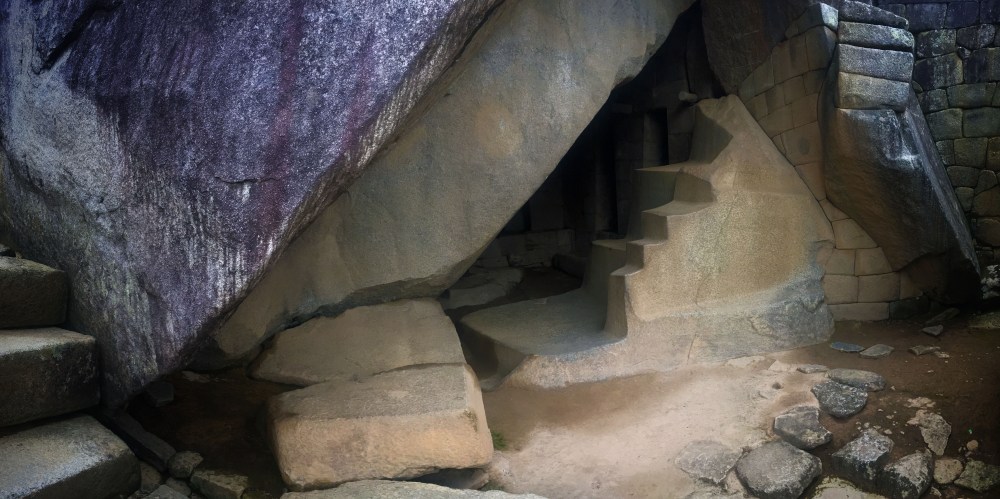
One area we made sure to check out on both trips lies near the center of the site. Like the Sun Temple at Ollantaytambo, this section stands in stark contrast to its surroundings. Its most prominent feature, also referred to as The Sun Temple, takes the form of a slightly conical tower growing out of a natural rock formation. The walls are smooth, light grey stone which has been perfectly contoured to the bedrock. The exposed granite section on which it sits has been purposefully carved out to form a cavern containing ceremonial platforms and doorways within its depths said to lead somewhere into the mountain. Unfortunately, this part of the ruin was roped off to the public in both instances.
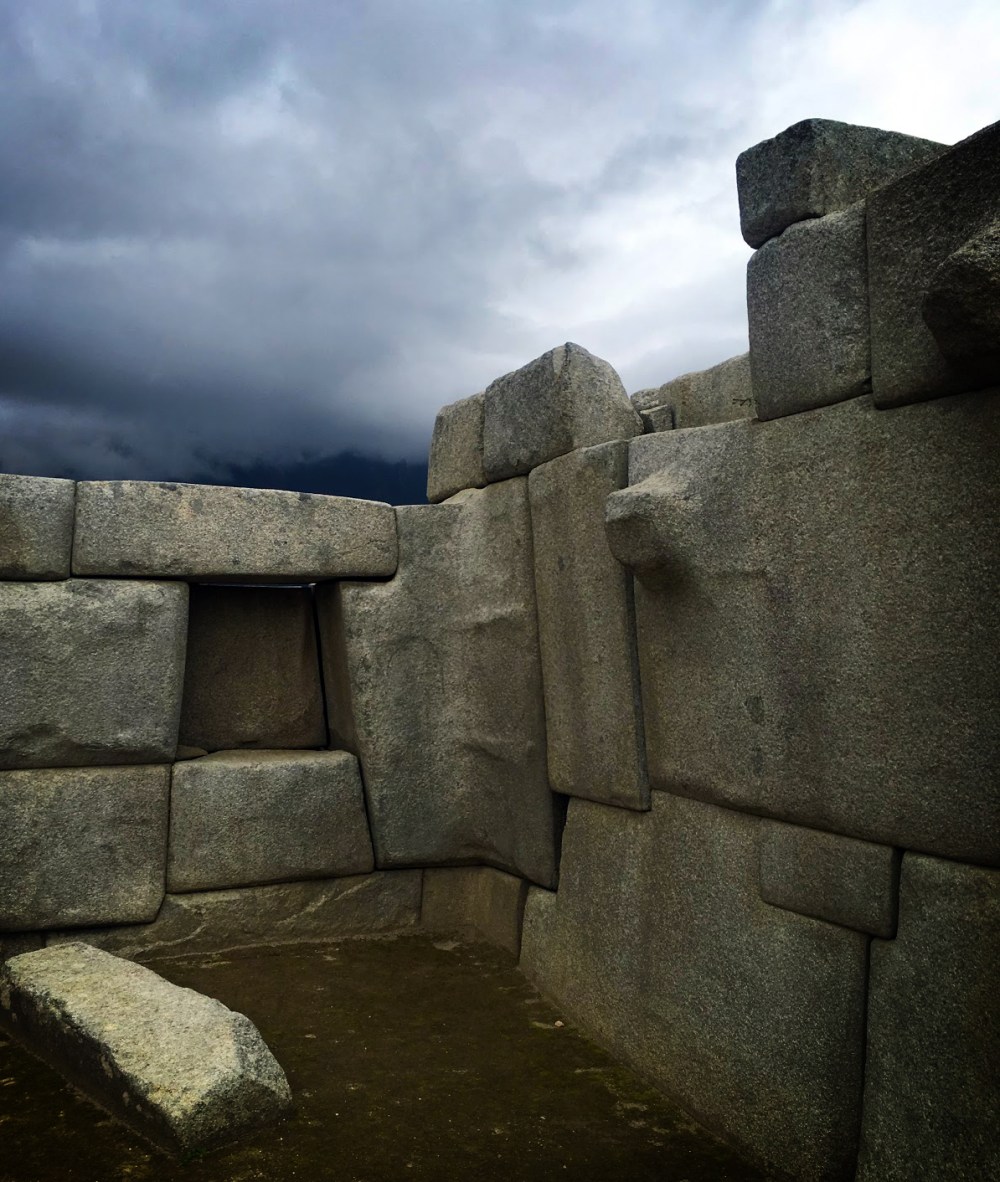
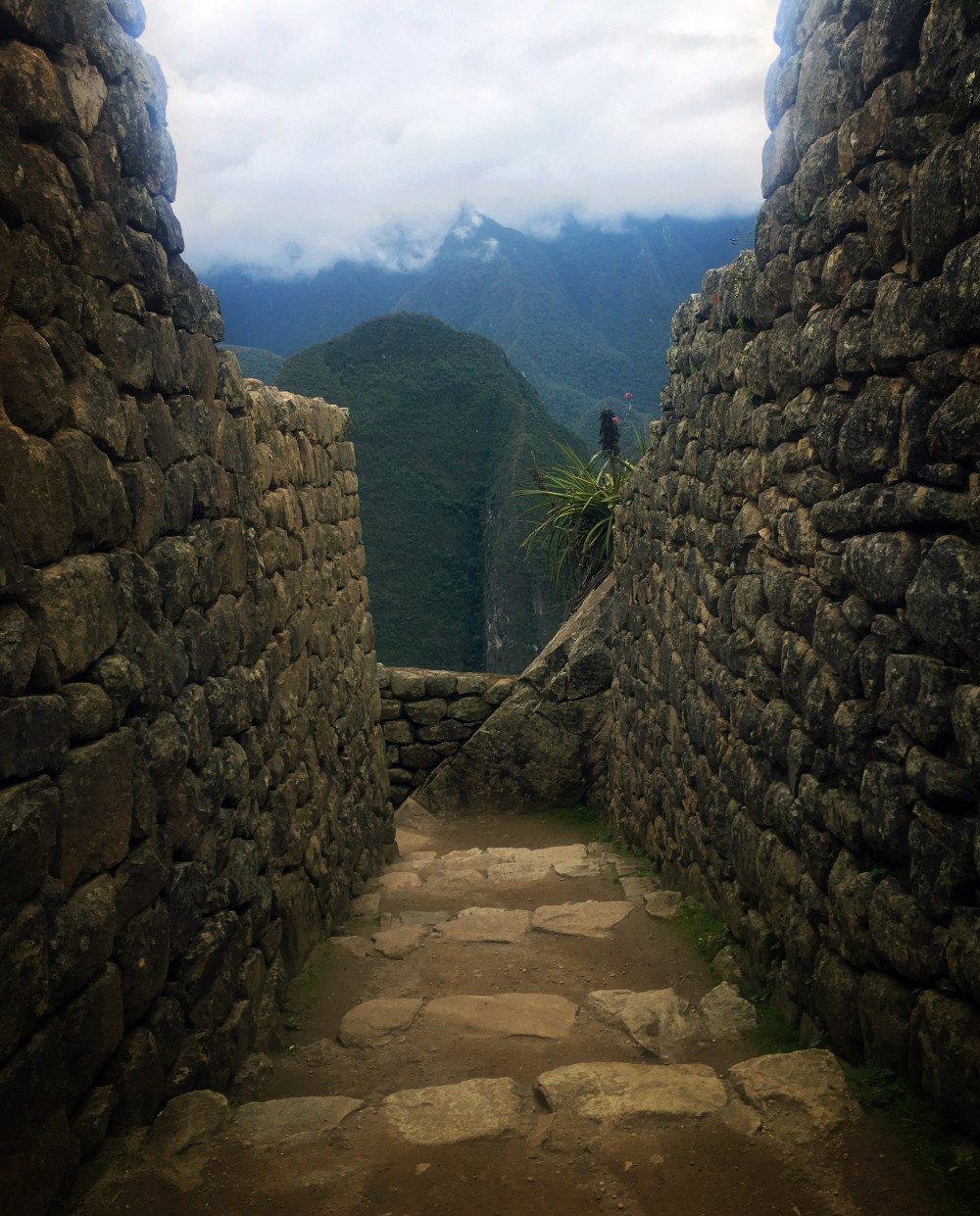
A small plateau just above the tilted tower holds large polygonal stones of similar quality which fit together like a puzzle to make walls and windows, and can be seen wrapping around interior and exterior corners of the structures there. Its mind numbing to consider the effort it would have taken to cut, form, and place the granite stones in such a complex manner.
Leading down from the plateau and running adjacent to the cavern there are a series of narrow spiraling channels that move water through the site and into small enclosures lining a nearby staircase. One could imagine the tiny rooms once being used for ceremonial cleansing, but who knows maybe they were bathrooms. Either way, we made sure to soak our heads in the crystal waters on both occasions before leaving by train via Aguas and back through the Sacred Valley toward Cusco.
We are so grateful for the amazing experiences afforded with each visit, and for our guests who were there to share them with us. Every year more of the site is being uncovered or restored by Peruvian authorities, and it is so extensive in any case that we could spend a few more days there without seeing every nook and cranny. We can’t wait to go back to explore other parts of the ruin, so let us know when you’re planning a trip!
 We Are Nonlocal