We woke a little early and a little groggy after day 1 to begin our exploration of an already bustling Ollantaytambo. Taking in the manicured main square for a moment after breakfast led us to believe Ollay was no different than any number of small villages in the Sacred Valley; heavily propped up by tourism and so transformed into a collection of brightly colored tiendas overflowing with locally crafted goods, and cafes tempting travelers with menus of the day (Excuse me Flo, what’s the soup de jour? It’s the soup of the day, she says. Ohhhhhh….That sounds good. I’ll have that.) However, only a block away from the square we stumbled upon something very different in old town Ollantaytambo. A perfect grid of intimate alleys, the floors and walls of which were aged masonry dripping with wild flowers and echoing the sound of water rushing through open channels at their edges.
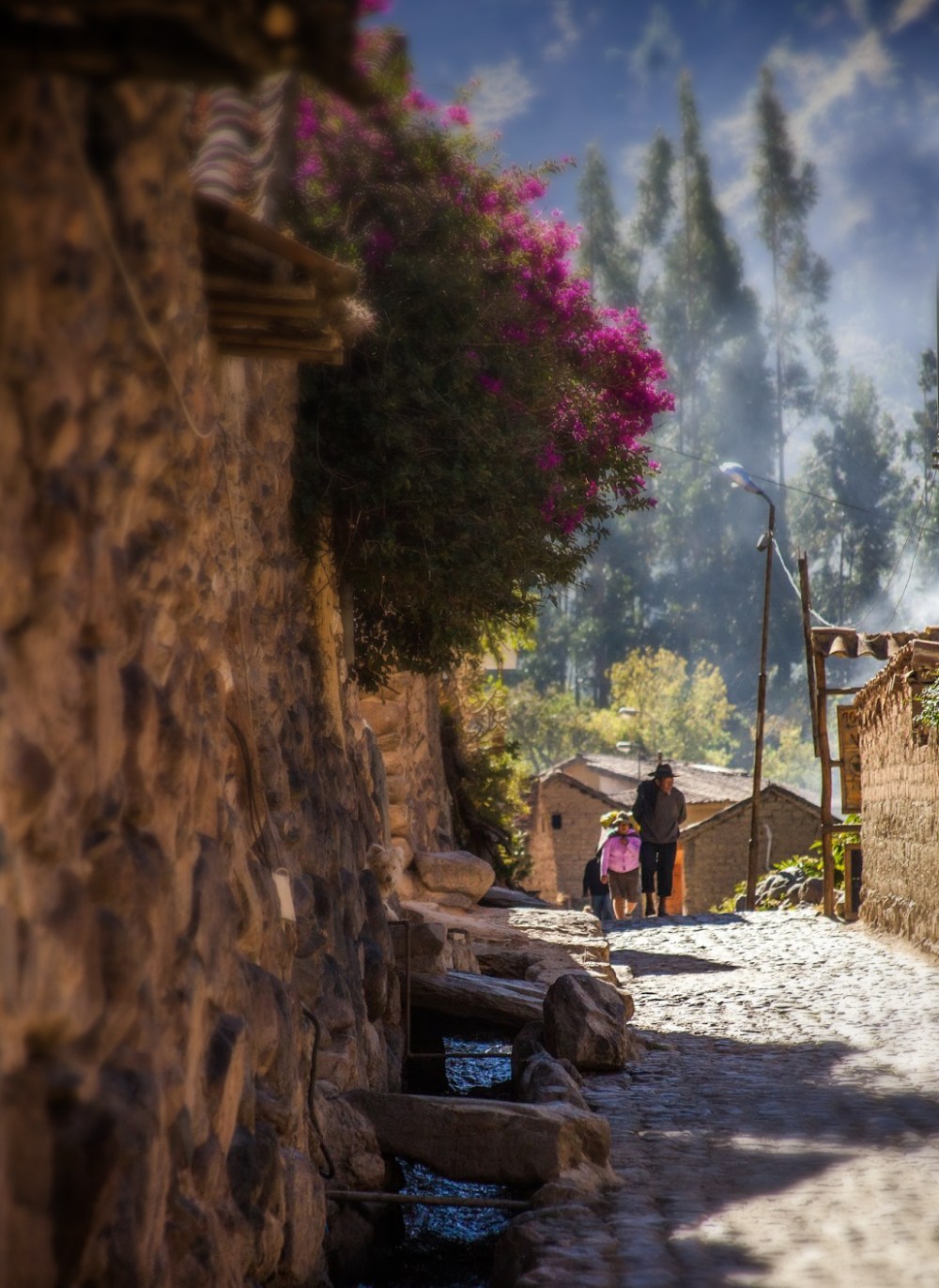
The fact that parts of old town are Incan constructions and that several intact ruins can be seen from almost any vantage point is likely the reason it is referred to by some as The Last Incan Village.
Although one could almost lose themselves standing still listening to the sound of the waters reverberating through the shady walkways, we knew this would be another long day, so we made way through old town and across the Urabamba river to the base of a large ruin that virtually covered the mountain before us.
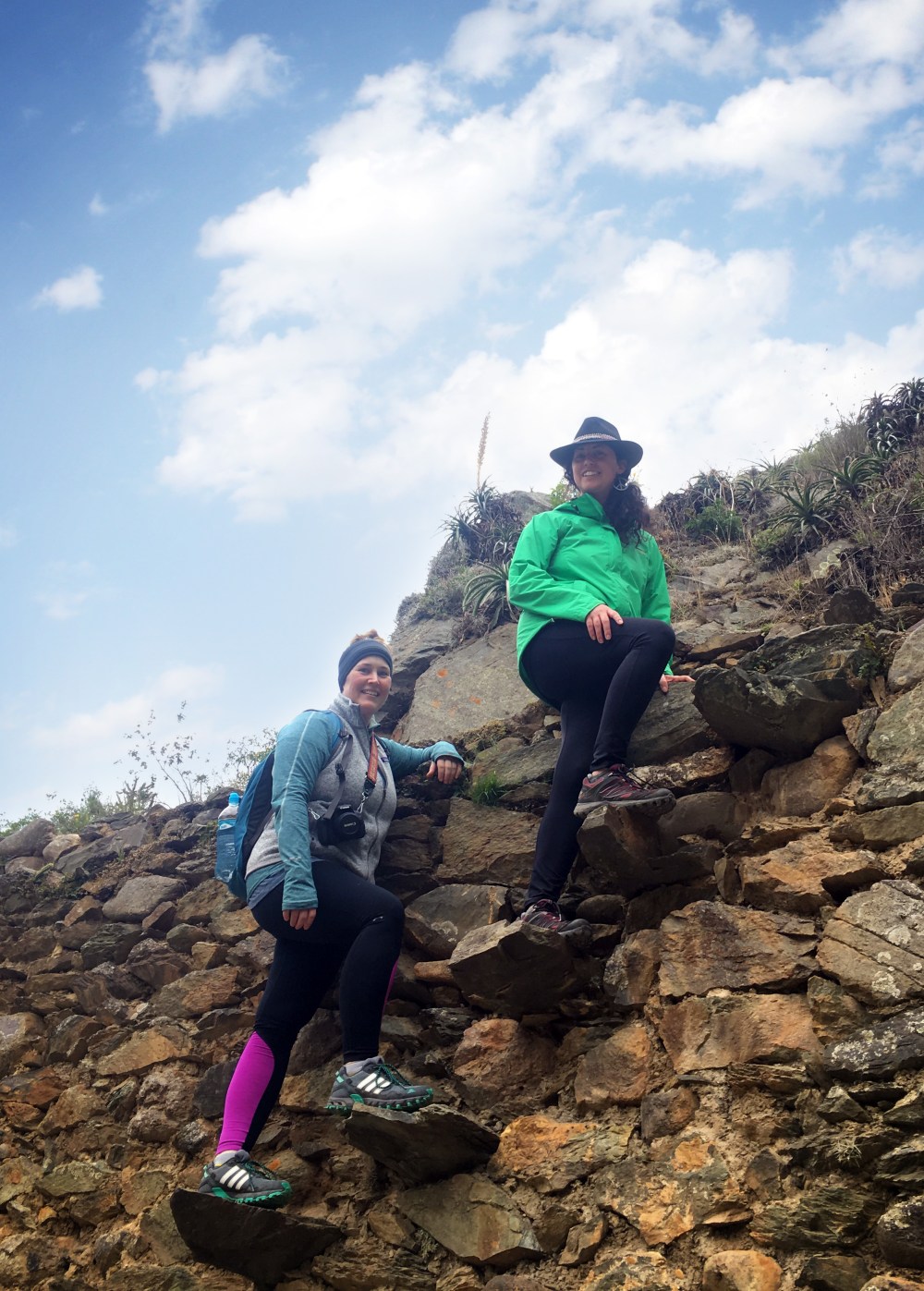
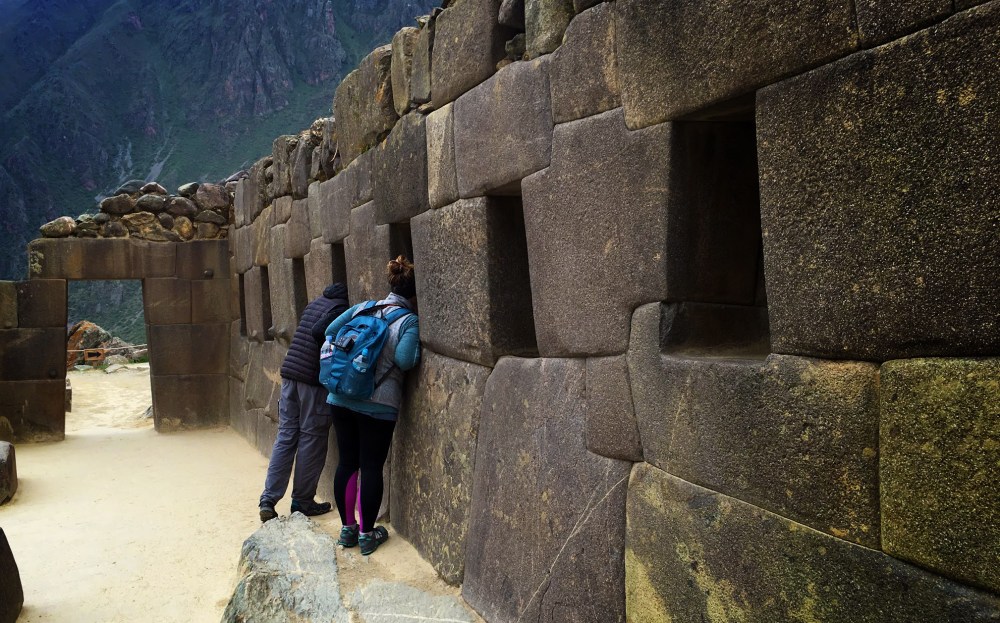
After climbing a staircase upward alongside agricultural terraces, we came to a narrow platform and stoped for a moment to eavesdrop on a tour group inserting their heads into symmetrical niches lining a polygonal stone wall at our side. Of course once they vacated we followed suit, sticking our heads inside the alcoves which collected the sounds of the valley below, the river, and the passing wind; equalizing them to an ambient undertone like giant sea shells. We quickly noticed they acted as sound chambers, greatly amplifying our voices in force and quality to the point we were almost lulled to sleep by the tangible resonance of our own vocal cords wrapping in around our skulls.
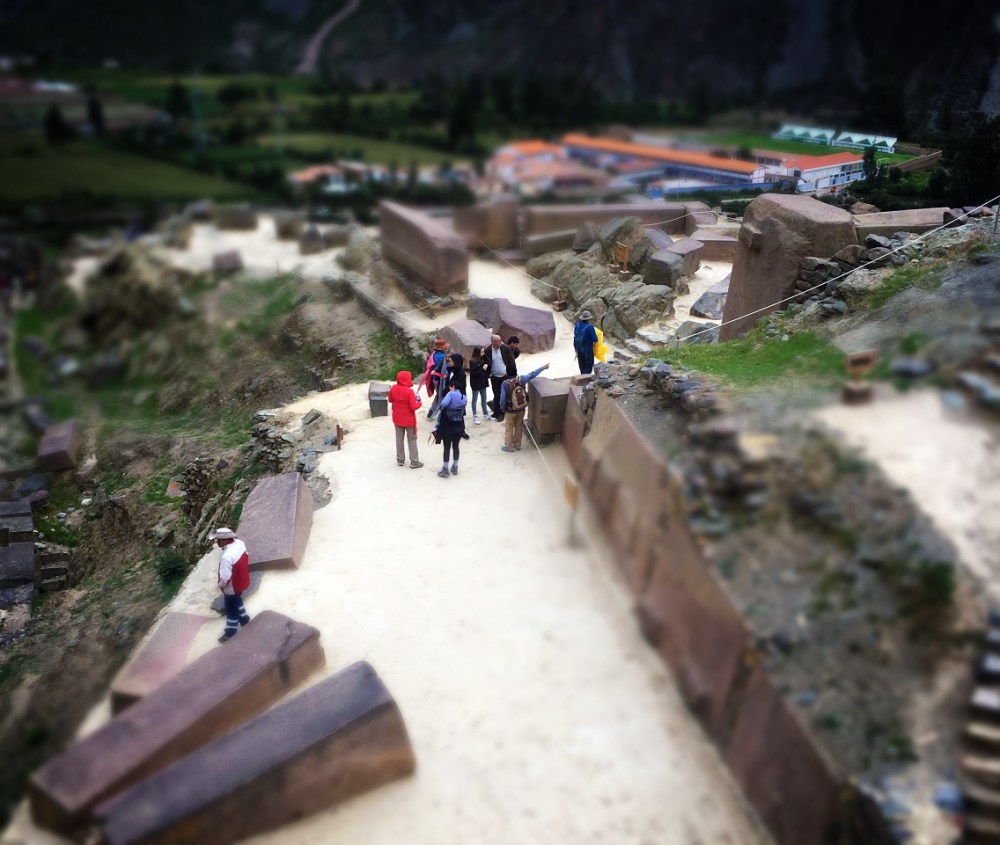
From The Enclosure of the Ten Niches we made our way up the hill to an enigmatic section of the ruin which differs in many ways from the rest of the site. The Sun Temple sits atop a peninsula of bedrock high on the mountain and is made of red/pink andesite, said to have been transported almost 10 miles across unthinkable terrain such as a canyon river valley with sheer rock faces reaching over one thousand feet.
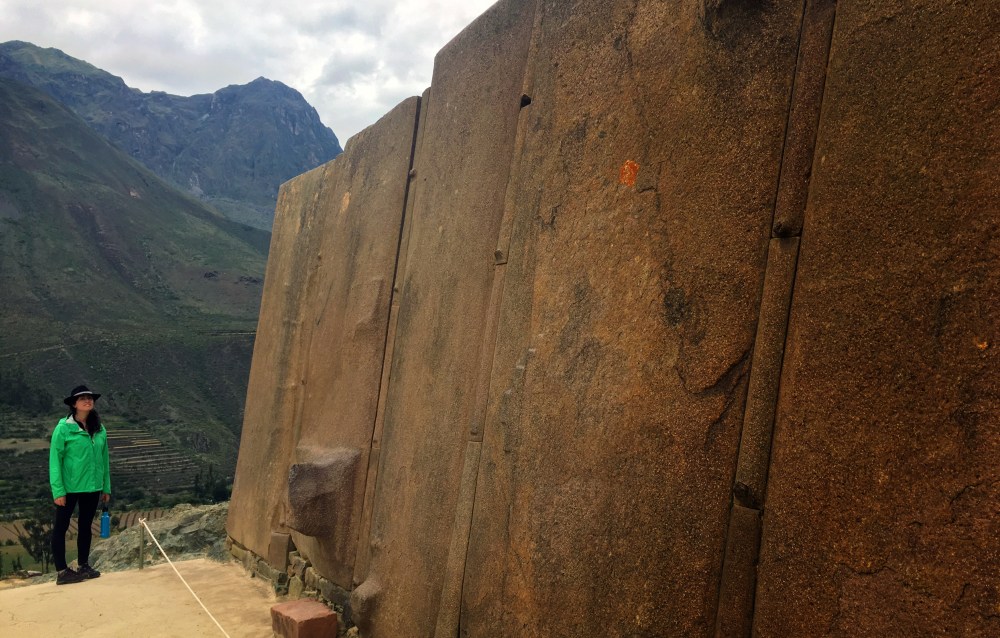
A series of pink megalithic stones estimated to be at least fifty tons a piece line one end of the outcropping. The temple seems to have undergone a major deconstruction by means of man or nature at some point. Several of the massive stones can be seen in various stages of submersion below the ground plane, apparently toppled or razed from their intended positions.
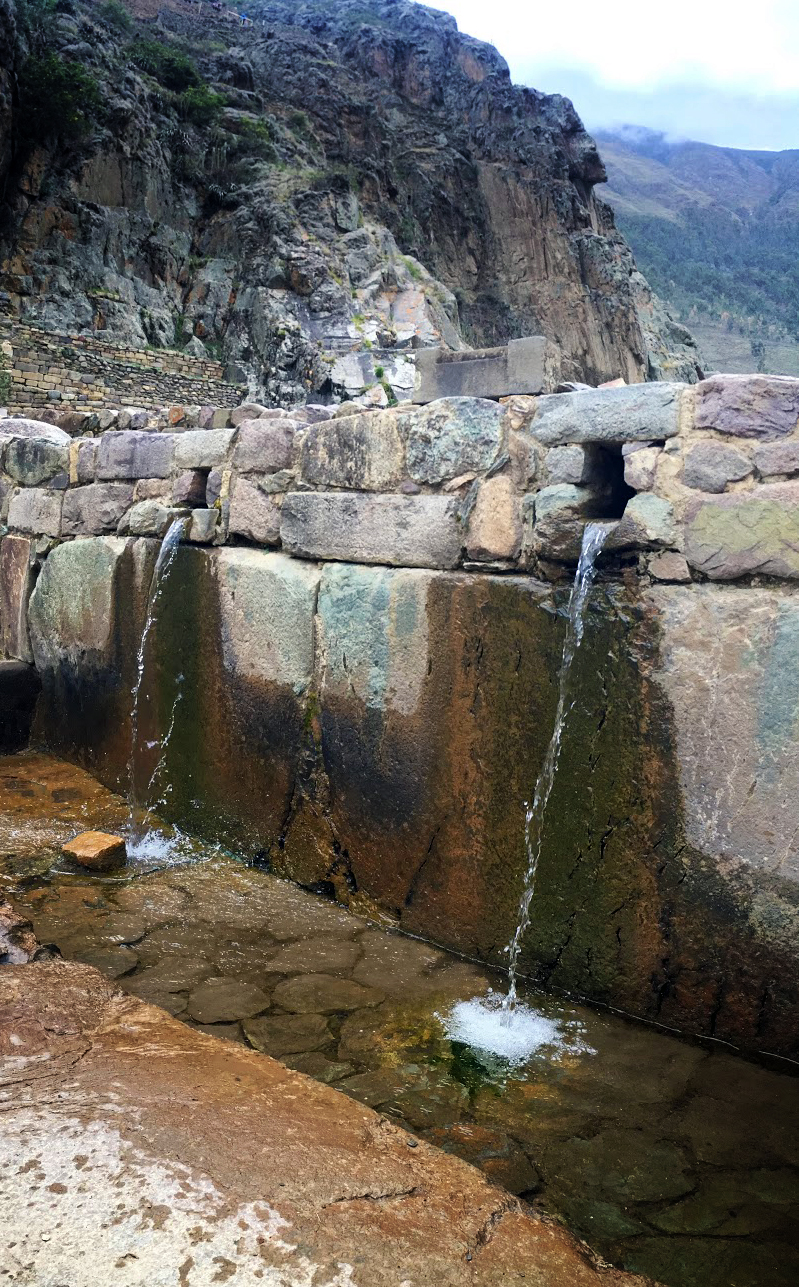
Within the ruin there are other structures made with relatively small (5-15 ton) polygonal stones precisely fitted together like those seen at the ten niches and inside the city of Cusco mentioned in a previous post. One such example lies at the base of the mountain where the Inca diverted the nearby river into large open canals that run the length of the complex as well as tiny channels purposely built to carry the water through and underneath small quadrants of grass riddled with large stone platforms where it is surmised there once stood sacred artifacts, golden statues, precious stones, etc.
Apart from those areas mentioned, the great majority of the ruin is constructed with roughly rectangular, dark brown and grey stone sometimes dry stacked and other times held together with clay mortar. Seeing the different techniques together in one place almost forces one to wonder why a people would alter their methods so radically within such a relatively short time period (some say less than 100 years). To add to suspicion, the seemingly older of the methods, seen at the base of other structures, as well as exhibiting signs of erosion and submersion is much more sophisticated than the rest.

Mid-afternoon we were dropped at a dusty curb outside of town where a local helped us determine which bus would take us on to Santa Maria. Although we were waved emphatically through the cab by the operator and his traveling family, we were surprised to find that there were no vacancies in the passenger section and had to take our places on the floor. Thankfully, after a short time an older woman motioned to us to come up front, where we sat on the entry stairs staring onward through the fog as the family joyfully gossiped and sang along to Spanish pop songs.
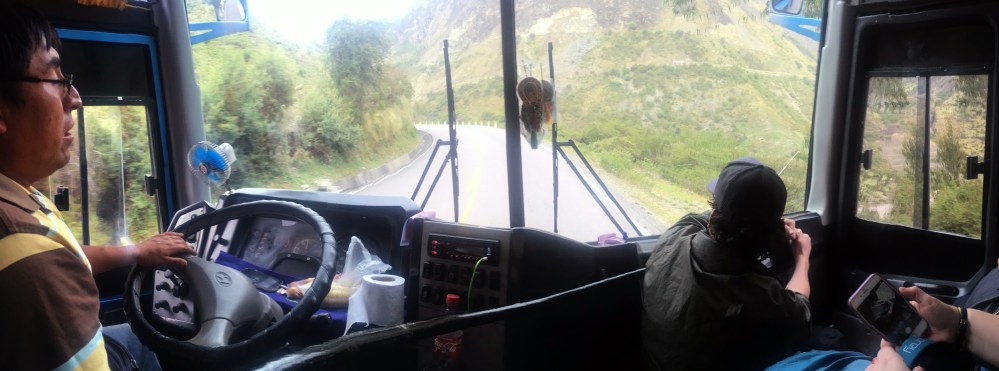
We were so close to the huge front window it felt as though we were flying over the winding road to Santa Maria where we would hire a smaller car able to traverse the mountain passes on the way to Santa Teresa.
It was dark when we arrived, but we found a small van to squeeze into relatively quickly and were on our way. Mel sat in front with the driver and his apparent love interest, a fact that didn’t bode well as he drove haphazardly over the treacherous terrain; one eye on the road, the other locked in a passionate gaze with his new partner. I sat crammed into a side panel thinking the middle bench must not have been made for three, while Kristi fought to fit onto half of my seat through the twists and turns over the mountain pass. After stopping Kristi informed me that the guy sitting next to her had a bad case of the spreads; sprawled out like a king taking up more than half of the row the whole time! Despite that fact we arrived safely, shuffled into a hostel, shoveled some food into our mouths, and got some shuteye.
 We Are Nonlocal