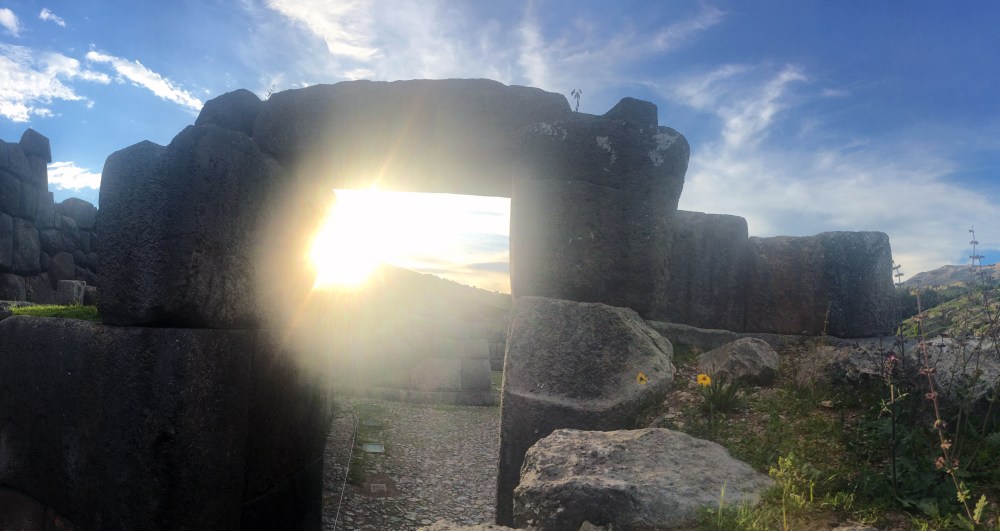
During our bike tour and on various treks we’ve noticed more and more women adventuring alone. Honestly, I think we’ve seen a preponderance of solo girls compared to guys along the way. In either case, it’s awesome that people are making adventure happen no matter the circumstances. On that note, after a tour of Banff, Canada our friend Kristi made a trip down during which we were inspired to check out a few new scenes here in Peru. Shout out to K-Dawg!

Once we had taken in the sights and sounds of town and Kristi had acclimated to the two mile high city we huddled into a collectivo, our bearings toward the Sacred Valley; a vast, undulating grassland veined with rivers that intersect small villages often established near a ruin or two. The Valle Sagrado, of which Cusco is a part, runs a sinuous path many miles northwest and southeast of the city between snow encrusted peaks like the Nevado Salkantay, “The Savage Mountain,” we climbed late last year.
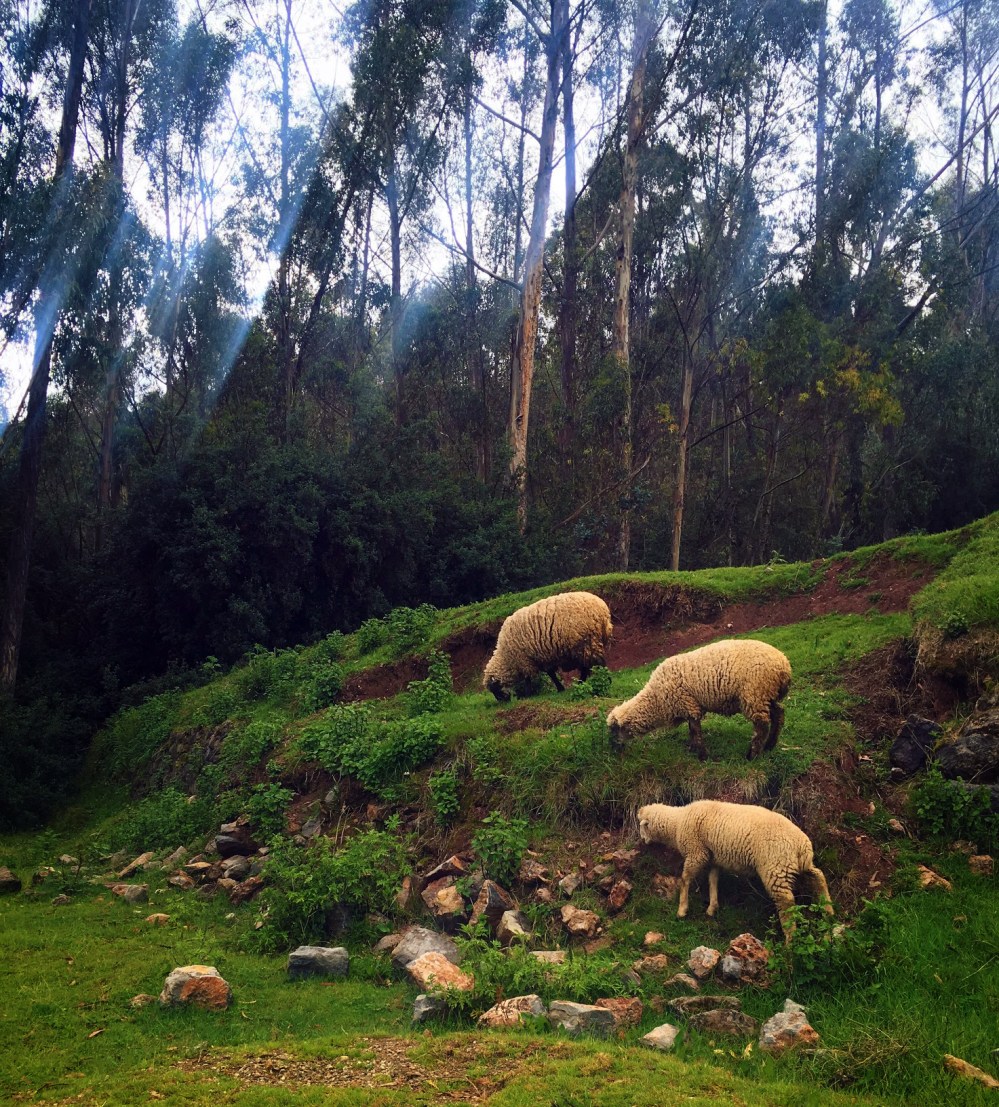
After about an hour of keeping a watchful eye on signs leading out of Cusco we asked to be dropped off in the vicinity of a small town called Chinchero. The sleepy settlement was all but deserted at this early hour as we hiked toward the GPS marker indicating the location of a ruin we were there to see.
Like the architecture of Lloyd Wright which impresses spacial contrast by way of choreographed movement through almost claustrophobic entrances to grandiose volumes, the shady cobbled streets and courtyards in town opened suddenly to a towering Spanish church resting on the edge of an almost alien hall, the likes of which would guarantee its creator renown.
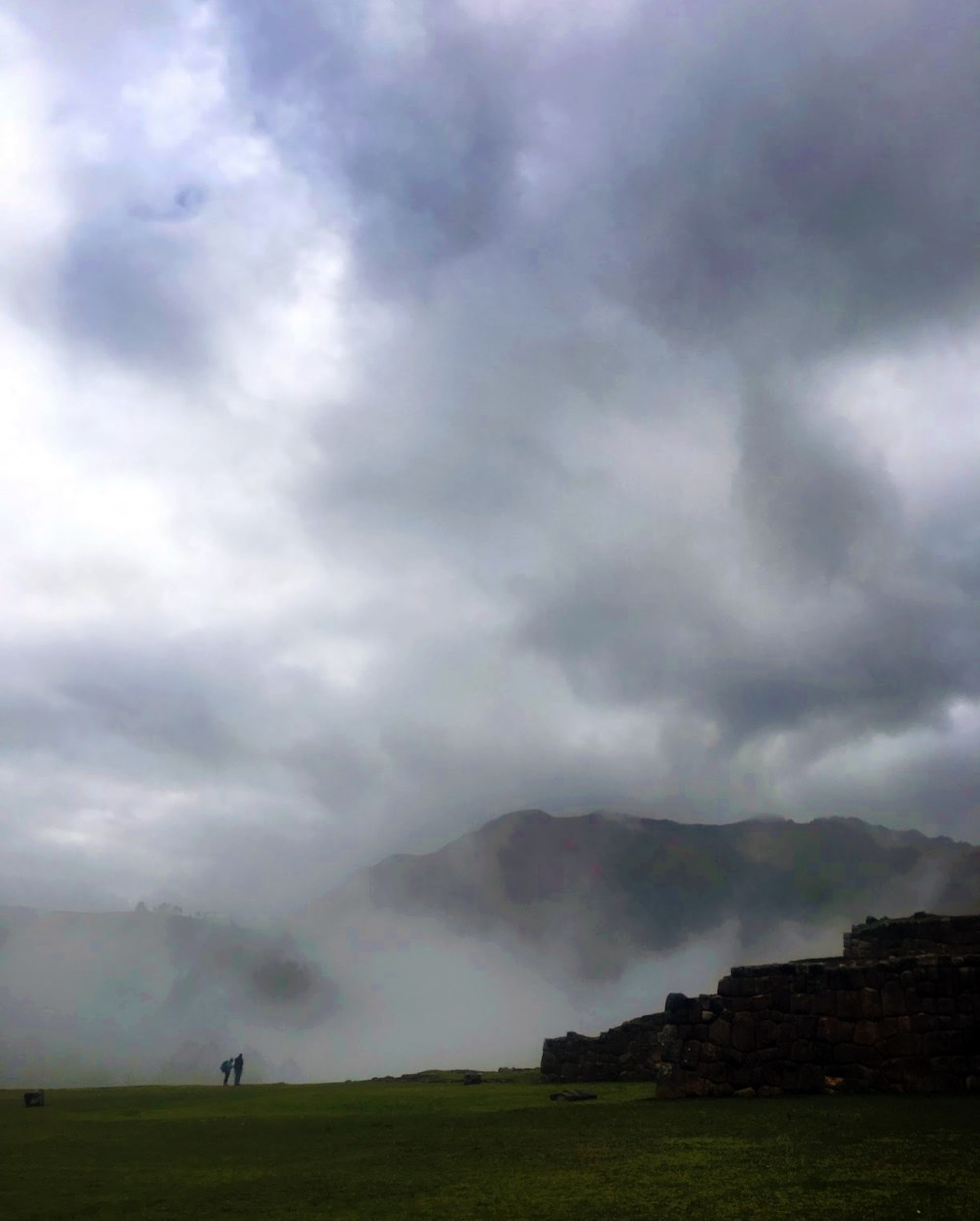
Its perfectly flush emerald floor spanned several acres to distant edges that dropped off sharply and emanated vertical walls of dense fog stretching far into the atmosphere. As we approached, the ghostly walls animated into windows revealing dark corridors that disappeared into the Andes, and doorways which led us through a labyrinth of shallow passages to expansive “C” shaped terraces funneling the landscape down to a river valley in the distance.
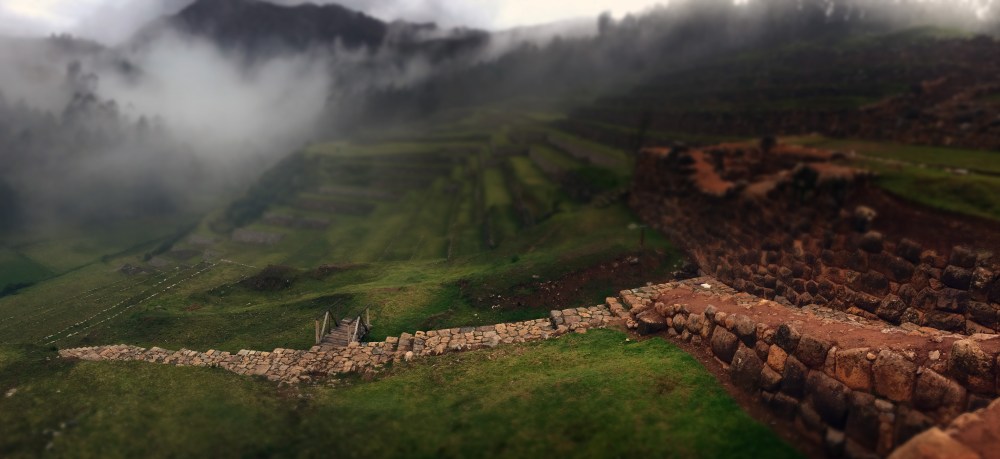
We spent some time taking in the beauty of the valley and a working homestead that flanked the river, thinking to ourselves, “If you’re going to farm this is definitely the place,” before hiring a cab at a now lively Chinchero market.
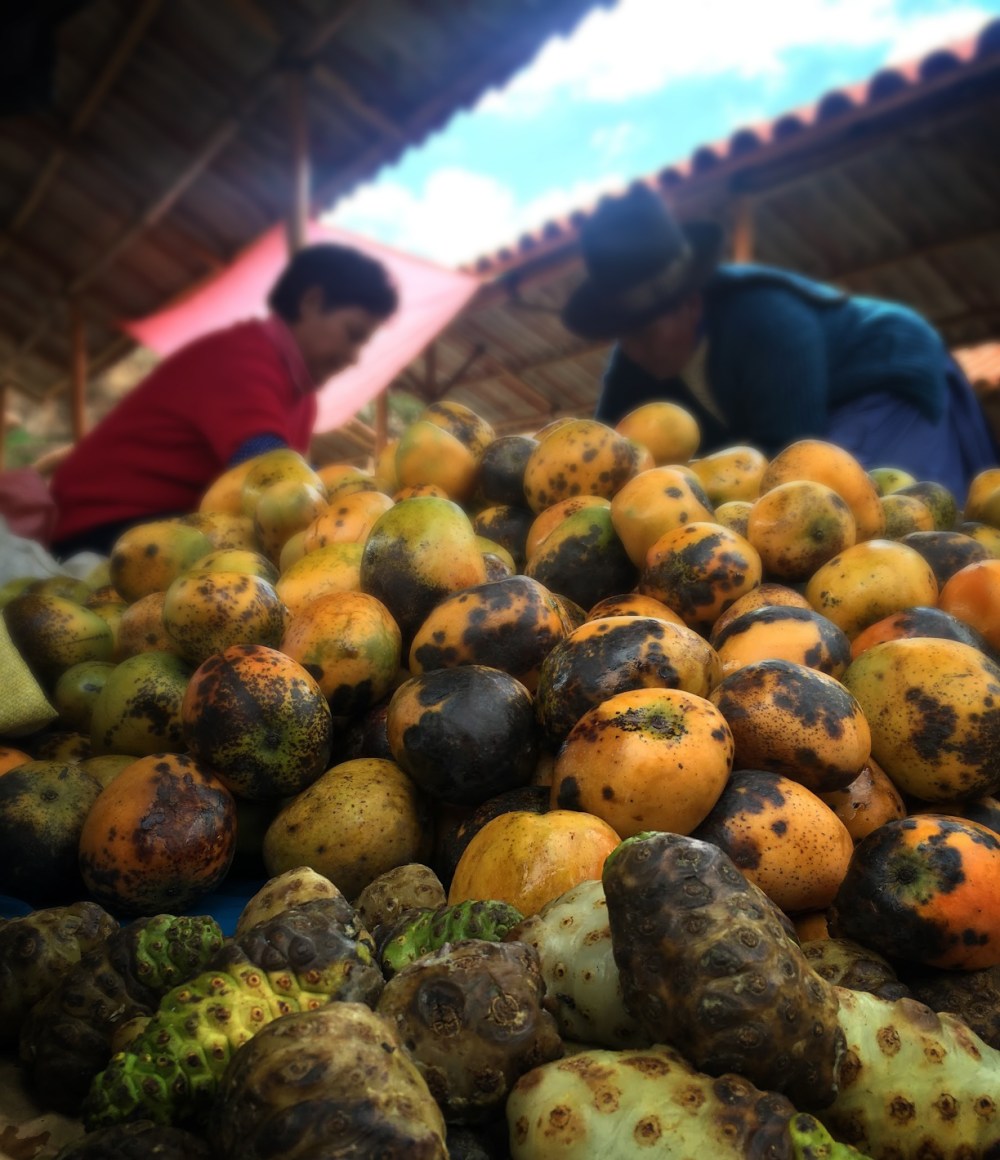
As we watched grasses turn to dust along an obscure dirt road near the small town of Maras, the rolling desert surrounding us split apart like an enormous geode to reveal a faceted landscape of pink, white, and brown.
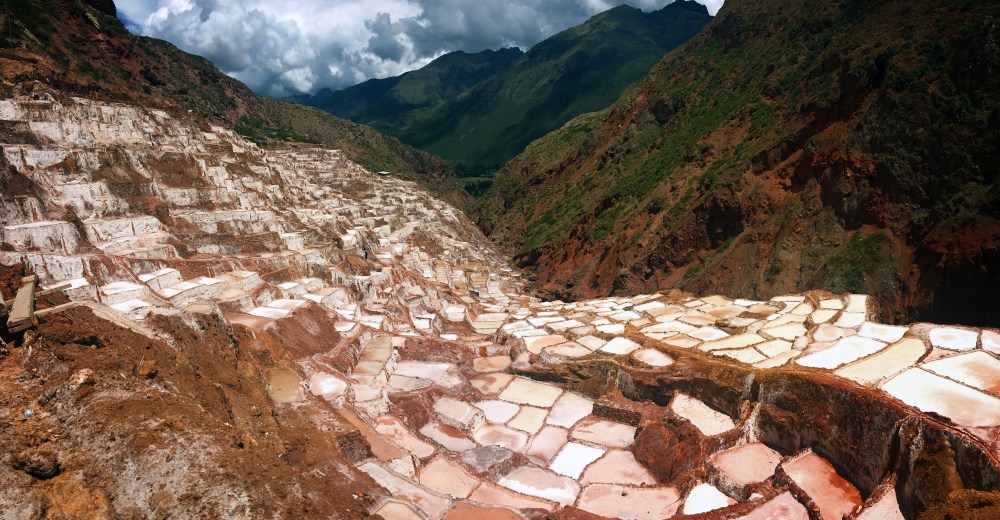
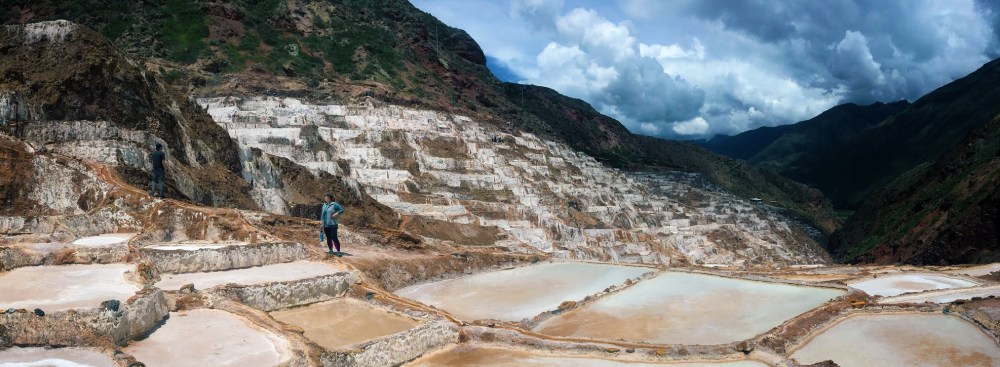
We had come to Salineras, a salt pan established some six centuries earlier consisting of thousands of shallow terraced pools that fill with brackish water trickling from the canyon walls and then dry to a crust of pure salt. The evaporative cycle continues until the entire site is saturated with the substance. After traversing a lace of narrow crystalline ridges lining each pool, we hiked to the cab and soon found ourselves back in the arms of small farms waving with grasses headed to Moray.
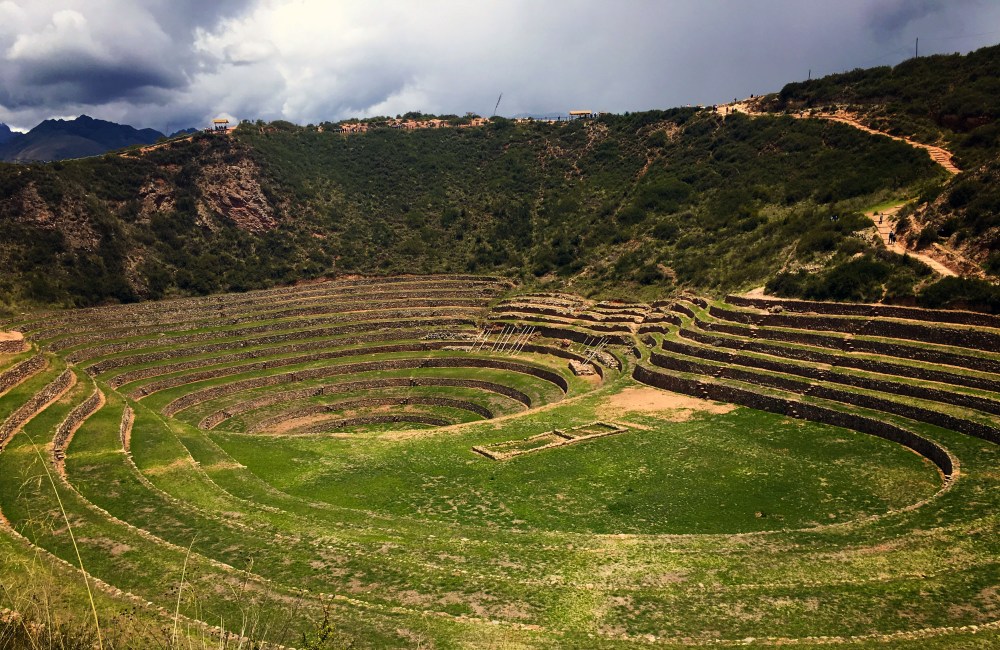
Amongst the hills of Moray sits a complex of adjoined circular and semi-circular terraces resembling sunken colosseums that hollow out hemispherical indentations in the land.
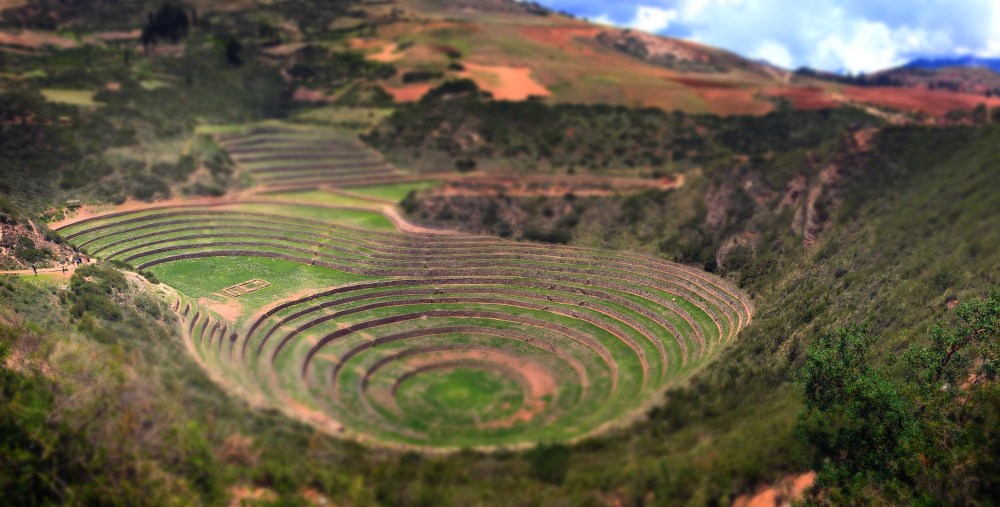
This was said to be done by the Inca as a grand agricultural experiment enabling them to test crops in various terrace levels characterizing a gradient of environmental conditions from top to bottom. These were some of the most compelling terraces we had seen so far in Peru due to both their shape and incredible scale.
By the time we returned to the car our driver had hustled up two additional travelers. We assume he failed to convey his current passenger load relative to the number of available seats judging by the guy’s face as he laid in the back with our packs while we rode over dirt roads to Ollantaytambo (Ollay). His only relief came when we all got out to push the taxi over a rutty bridge it couldn’t manage filled to the brim with passengers – just another cab ride in Peru.
We made it to Ollantaytambo before dusk and stumbled into a hostel aptly named Casa de Wow. After getting to know the owners, Mel and I realized we had a lot in common with the pair. The guy, Wow, was into Kung-fu (Mel’s current obsession), and came from a long line Curanderos, or healers native to the area. The girl, Winn, had organized a renowned herbal conference in the States, was an author, and made interesting conversation on the subject of Christian Mysticism.
Satiated after dinner and an informative visual tour from a lookout atop the hostel which included a lesson in Inca philosophy and introductions to the Apu’s, face-like figures on the mountains overlooking town, the three of us drifted to sleep anticipating a favorable remainder of the journey.
 We Are Nonlocal