The beginning: Cusco to Marco Casa
In search of an adventure to highlight our Thanksgiving holiday, Mel and I stumbled upon some information regarding a trek interlacing the glacier-laden Andes of Peru and the low lying jungles near the foot of Machu Picchu. Due to it’s proximity to our home base, and the fact that it would give us the chance to preview the area before our friend and fellow adventure seeker, Kristi, arrives mid-December, the Camino Salkantay proved a prime prospect.
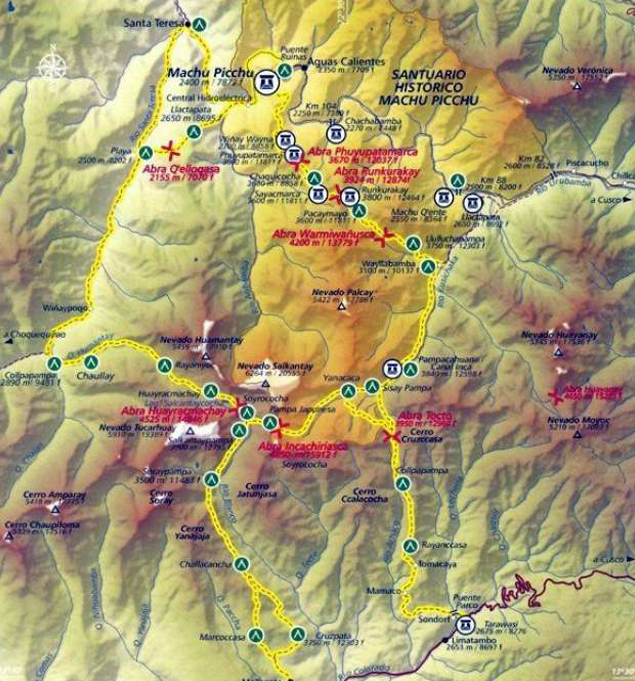
Salkantay is a Quechua name which means wild, uncivilized, savage, or invincible. In reference to the pass we would be ascending, it is often translated, “Savage Mountain.” Despite the many adventure touring outlets offering guides and pack mule transport through the area along with warnings against going at it alone, we maintained our confidence that, “if tour groups can do it, so could we.” Unfazed, we loaded a couple 50 liter packs with gear from our bike tour, saved a screenshot of a Spanish map which seemed somewhat to scale; and huddled into a collectivo, or shared van, gladly forking over the 15 sole fare with an onward yet hazy 6 a.m. stare, our eyes, nonetheless, gleaming in the morning sun as we turned northwest toward the savage mountain.
Two and a half hours later we reached the small town of Mollepata which sits politely at the base of the Cordillera Vilcabamba, one of the most formidable ranges in Peru. Its jagged, snowcapped peaks stretch to altitudes over 21,000 feet., seven thousand higher than those in the contiguous United States. Because we forewent an earlier 4 a.m. start which would have allowed us to make the first designated zona de campando, we paid another 25 soles for a ride to the closest checkpoint, Marco Casa, shaving four hours off our hike; a smart move for anyone following in our footsteps.
Upon arriving, our driver emphatically assisted us out of the van, pointed to the trailhead, and hurriedly mentioned that water stations were closed for the season before making his way back down the droughty dirt road and out of sight. “Well,” we thought, “that’s fitting,” as this marked a year to the date, November 20th, the start of our bike tour in Colombia and the beginning of many days spent roughing it, rain or shine, water or not.

As we made final preparations a Peruvian guide approached with the question; “Eran solos,” are you alone? We casually answered yes, after which he followed abruptly in English, “Do you know where you’re going?” “Mas o menos,” we responded truthfully. One corner of his mouth feigned an upward turn as he shook his head and motioned to a group to pursue him up the pass. We held back for a bit so as not to hang on his coattails and then took to the trail, bounding up steep switchbacks with the enthusiasm of kids on their first venture around the block before recalling that we hadn’t worn packs since a Grand Canyon trek over a year earlier. “Maybe we should take it easy,” we thought, as we surveyed a tabletop mountain heaped far above the horizon virtually eclipsed by the one we were currently climbing. Perspective is everything, and now we had some. It was sunny, hot, and expected to be uphill all day. We probably didn’t have enough water. We weren’t exactly experienced climbers or used to carrying heavy packs. We didn’t have a guide or a decent map, but we had each other and a heart for adventure, and were satisfied that was all we would need.
Day 1: Marco Casa to Soraypamapa
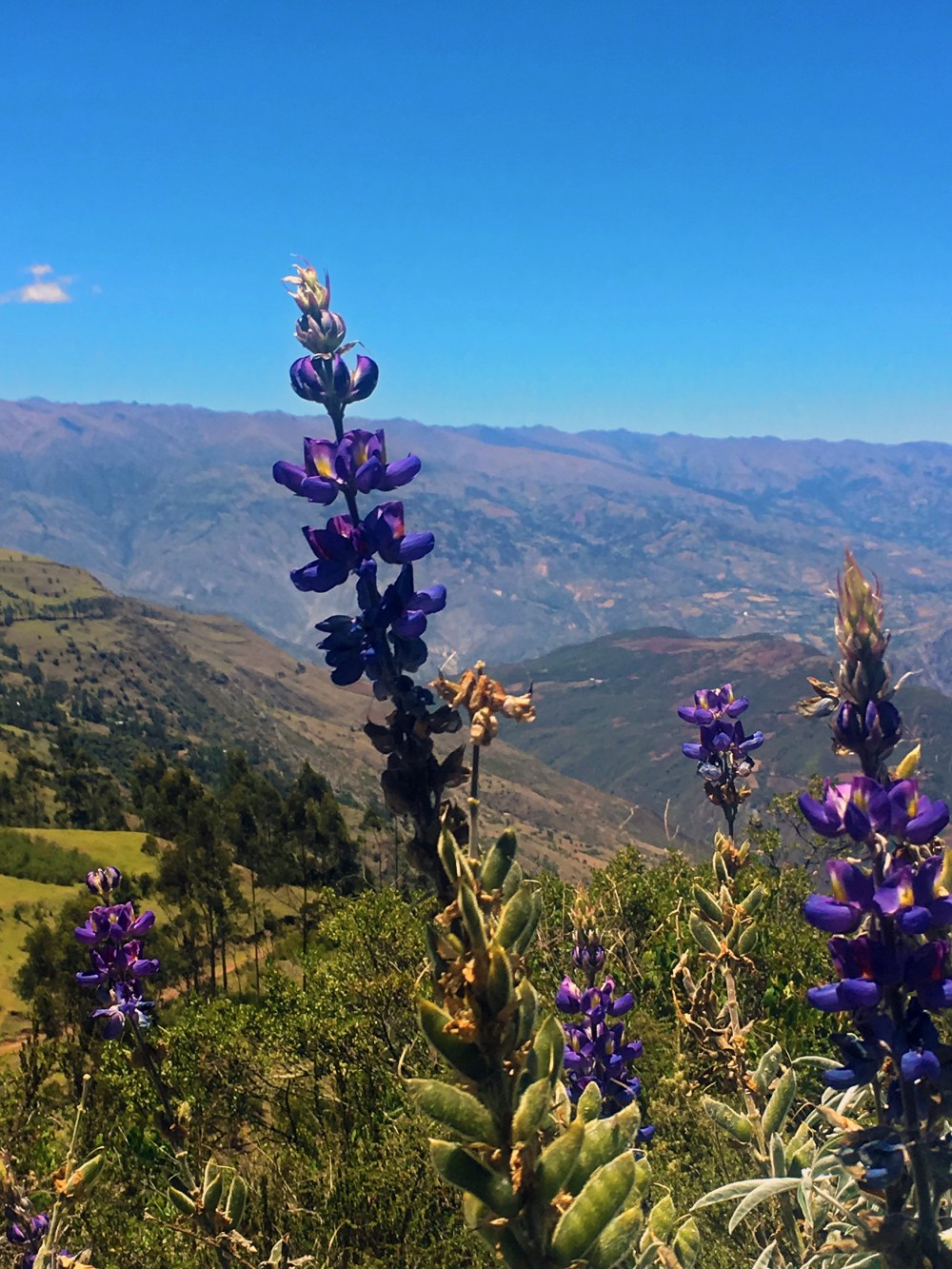
The trail from Marco Casa to Soraypampa split several times in the opening hours of our ascent, each crux coaxing a choice – up or down, left or right – that could not adequately be determined by consulting our decidedly crude map. In retrospect our rulings seemed wishful thinking, typically diverting downward relative to the opposing side of the coin. The resultant excursions each entertained arcs which auspiciously rounded the next nearest hillside, but inevitably lead to humble homes tucked timidly between the trees, their appearance forcing us to double back again and again.
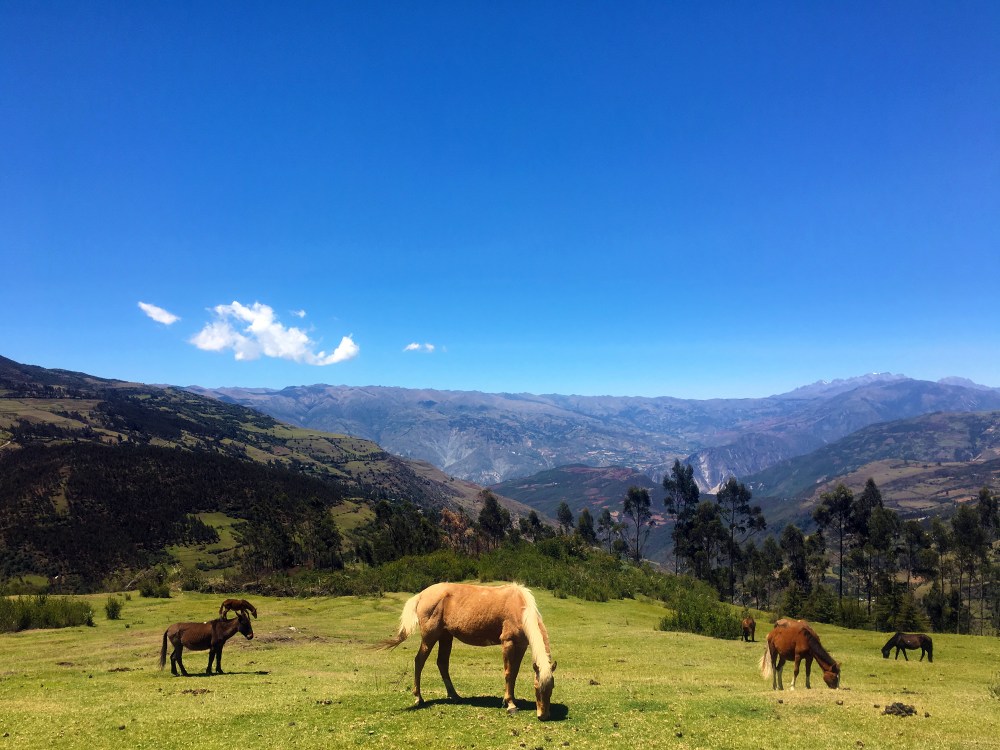
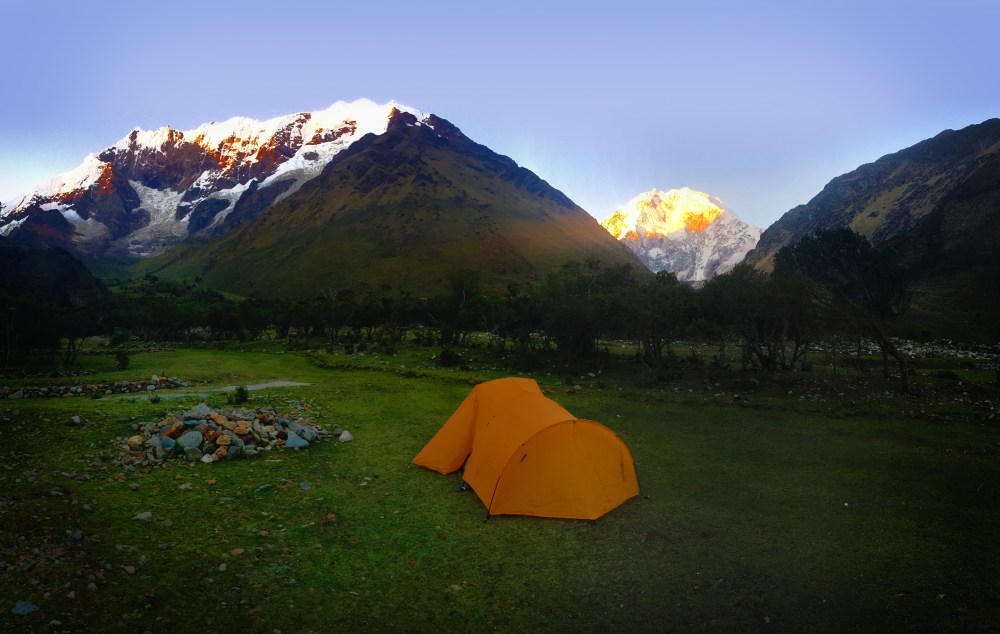
After stopping to take in the scene at an expansive mirador filled with free roaming caballos, we scrambled up and over the first dusty peak and were relieved to find that an aqueduct soon came into contact with our course. It turns out water was not an issue, as the duct and several asides to estacións de aqua, albeit cerrado, fortuitously paid off. The uphill heave subsided roughly nine miles from our starting point as day one turned to dusk, and we rounded the final corner overlooking a shady valley intertwined with the remaining tendrils of a once mighty river. A small but plush, grassy knoll padded our night’s nest in lue of sleeping mats mistakenly left behind. Before being lulled to slumber with the sound of swiftly rushing waters we paused to appreciate the setting of which we were now a part. We stood there alone, the shadowy mountains rising at our sides in stark contrast to the snow-encrusted Salkantay set a golden blaze by an evening sun, undoubtedly foretelling the richness of the journey to come.
 We Are Nonlocal