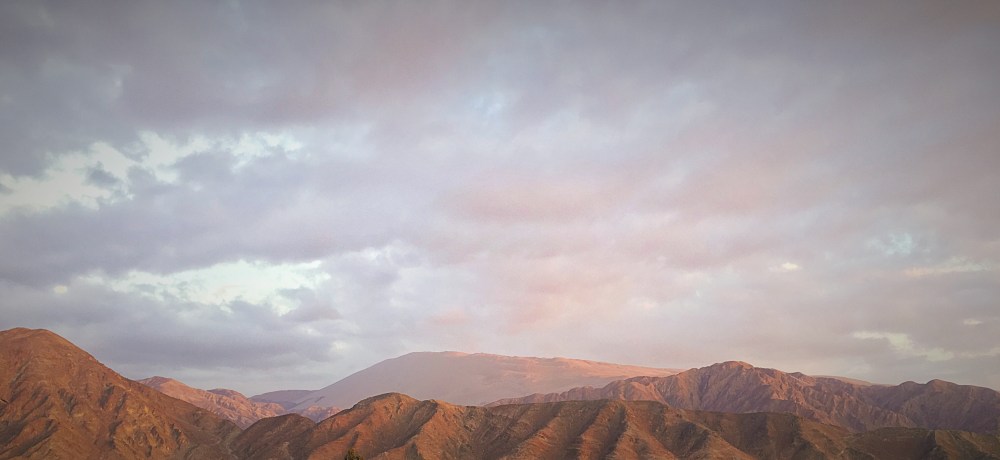
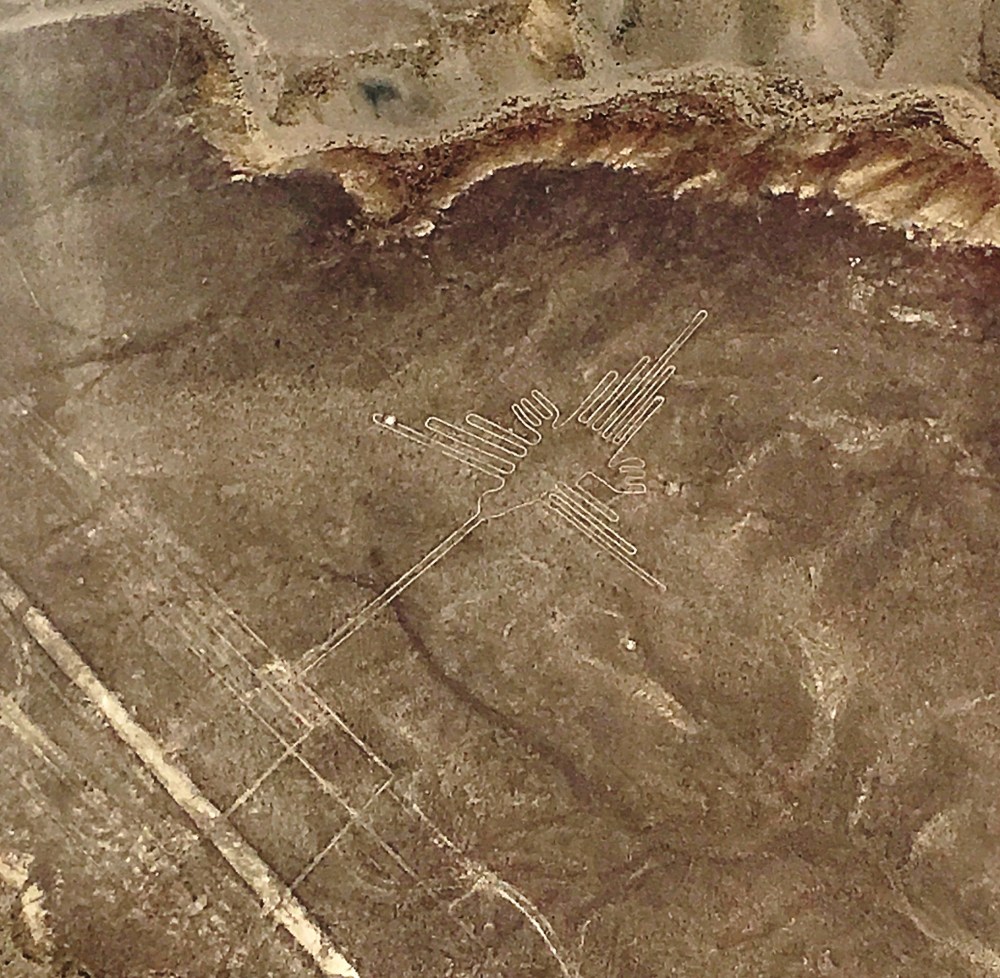
After a little over two weeks living it up in Lima we made our way south along the coast through townships and territories flanked by dry desert and balmy beaches, to Nasca, a small city known for giant geoglyphs of ancient origin. You may be familiar with the Nasca Lines for their depiction of insects and animals (a monkey, condor, spider, hummingbird, and other figures) some spanning close to 900 ft from edge to edge; all cut into the earth at a scale which can only truly be appreciated from a perspective high above the ground. What we did not know about the site until chartering a plane to view it from the air is that alongside the twenty or so popularly mentioned glyphs, multiple hundreds of polygons and perfectly straight lines of vastly greater scale and quality exist there. These at first seemingly random shapes and lines appear to be the older of the two types, as the outline of some of the most well known figures are actually stacked on top of and cut into them. I am sure many have speculated, but from our perspective these unexpected forms resembled a number of things that may be difficult for some to reconcile. Runways come to mind, navigational maps, or some form of calendar the interpretation of which has long been lost to antiquity. The scale of the site was staggering, some 190 square miles, and because of its immense size it was not without adulteration. Present day roads and small towns have been built onto the land, leaving one to wonder whether there were once even greater works since destroyed by modernization without consideration. Scholars suggest that many of the glyphs were carved into the earth some 2,500 years ago by an ancient people in honor of their gods. The truth is that like much of the information we receive regarding ancient works and the ancients themselves, we really can’t say with absolute certainty either the date they were fashioned or their actual purpose.
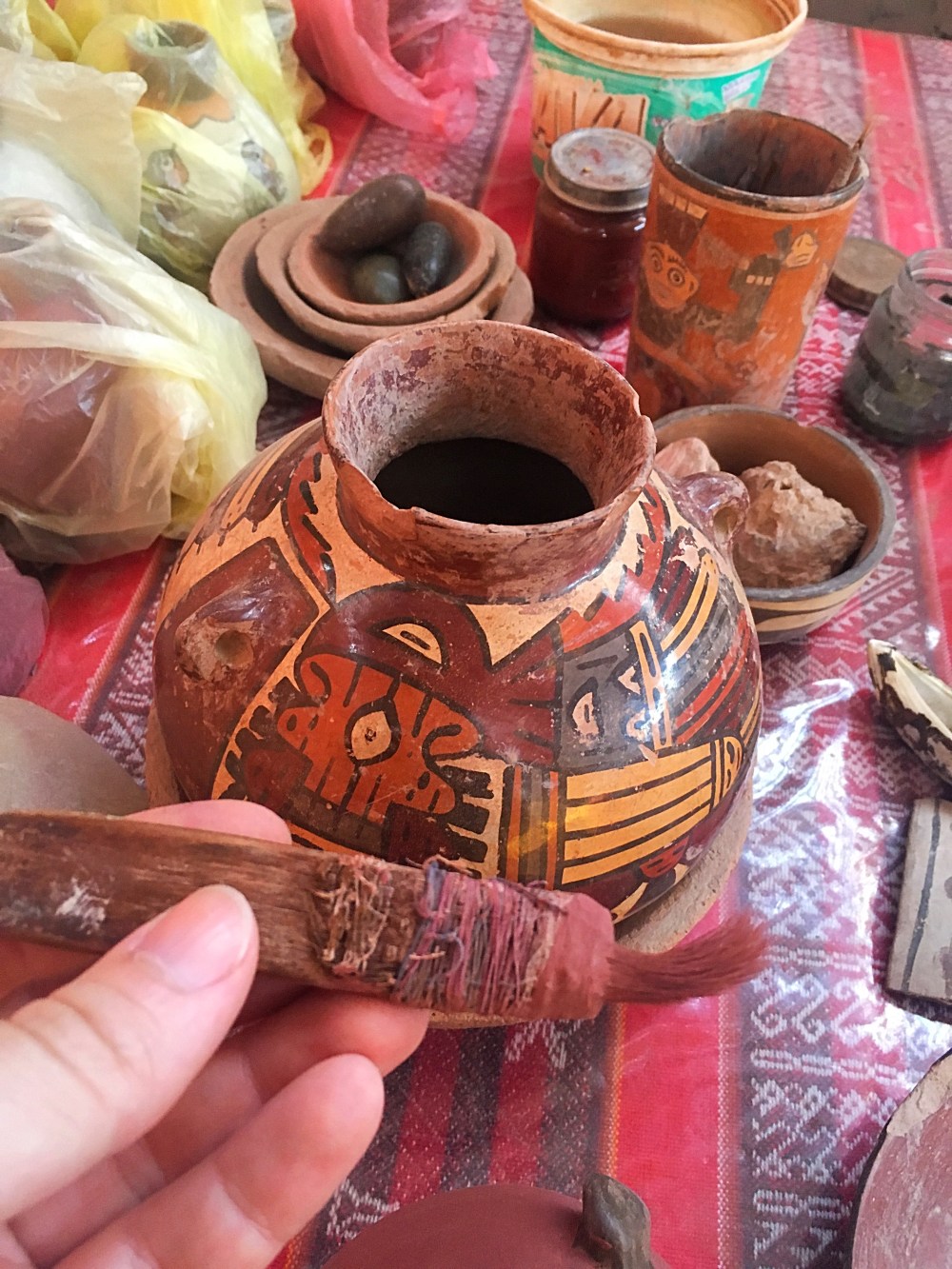
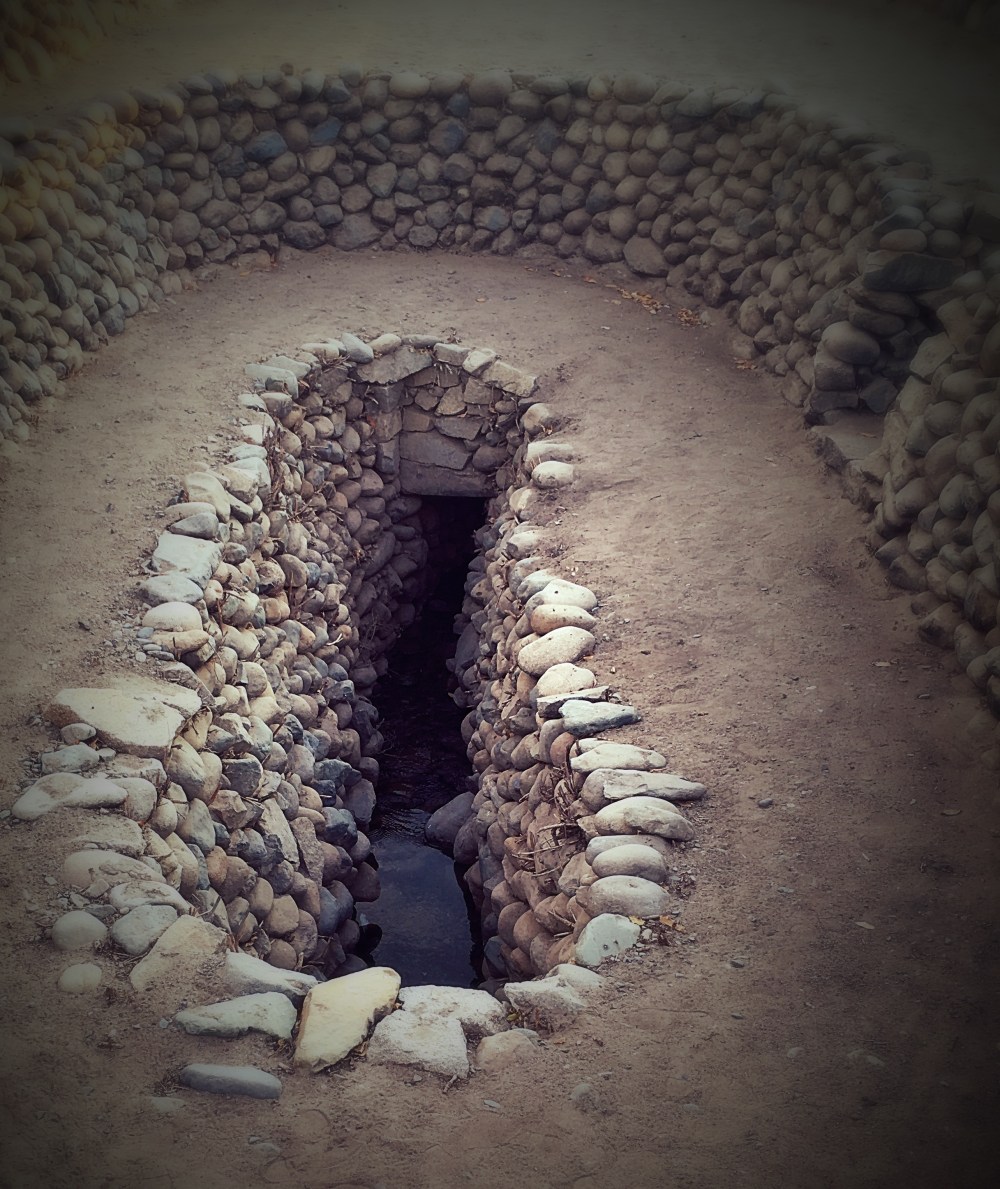
For the price of merely 15 soles our energetic cab driver Julio provided a personal tour of Nasca from a local’s perspective. We witnessed a demonstration of traditional pottery making using only sand and clay, animal hair brushes and mineral dyes to produce some impressive artisan crafts. We were also able to view a series of aqueducts which once acted as arteries delivering life giving water to the town. Unlike most similarly dated designs which diverted rivers and remained above ground, these were engineered to transport their treasure from underground aquifers. Each were trenched or tunneled, reinforced with dry stacked stone, and covered again to create elaborate pipelines some of which run for miles beyond the dusty mountains surrounding the city. They were cleverly designed to slow the flow of water to a manageable pace by winding back and forth in areas of quick descent, and with openings at discrete intervals for maintenance and general access. Apparently 12 of the 36 or so surviving channels still carry water today, and we were lucky enough to visit a working furrow; to climb down, stand within, and drink of the pleasantly cool, crystal clear running water. It was astounding to consider the amount of work that went into both the lines and aqueducts. Sites like these make you take a step back and wonder by what motivation and what means these ancient people accomplished such great tasks, especially given the technologies they are purported to have had access to at the time.
Before leaving we hiked to an area outside of the city said to emanate a high concentration of energy and electromagnetic frequency. Far from the cobbled streets of town and across the parched bed of the Nasca river, we came upon a narrow valley approaching the foreboding desert mountains in the distance. The ground was covered in rubble that gave way with each step as we climbed to a small plateau flanked by dark hills of jagged shale. A dusty walkway cleared of rock led us to the mouth of the sacred center; the circular boundaries of which would be entered only after leaving cell phones and shoes behind. We stepped into the main clearing and onto a powder soft floor still warm with afternoon heat, through a series of paths and small pockets of sand encircled with stone, in search of the perfect place to sit in silence as the clear blue above took on the vibrant colors of a setting sun. We remained there until a million tiny sparks began to pierce through the night sky wondering just how many others had looked up in reverence upon the stars from that very space before us. We truly felt that we were not alone, and there was comfort in that.
It was getting late so we hiked back to our car just in time to gather our things and catch a bus to Cusco, the epicenter for both sacred and ancient sites in the Americas. We could not wait, but with a ride of 12 hours noted on our tickets, a heightening anticipation was inevitable as we ascended from sea level over 11,000 feet into the Andes in hope of a new place to call home.
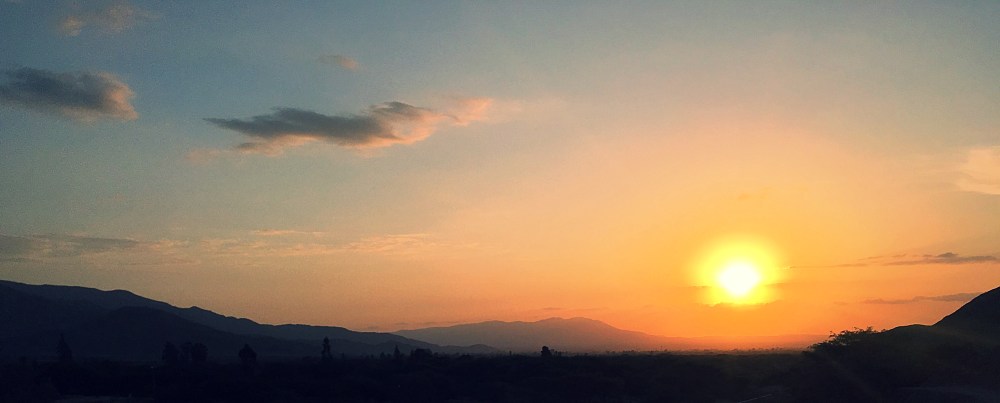
Check out some photos from our time in Nasca.

 We Are Nonlocal