Emanating from somewhere deep within the heart of Colombia there is a force, like that of a gigantic magnet, with a pull so strong it attracts weekend wanderers from every corner of the globe, yet so subtle that often a brief visit turns to weeks and even years of time away from the places they once called home. We ran into several souls who had landed in Salento as day trippers only to find their dusty return tickets 3 and 4 years later; an aging reminder of another life in which plans were made and adhered to. Our friend Amy, for example, swears her plane is still waiting on her and now avoids the airport at all costs.
For us it was as if the hours melted into days, and before we knew it over a week had passed in the small sleepy town nestled in the coffee triangle. The place has a way of making you comfortable, but it was the holidays so a little down time felt just fine and there were so many things to do. What could possibly be more of a draw in coffee country than a tour of a genuine finca de café, or coffee farm. It seems a must for all tourists and a growing portion of the city’s economy these days.
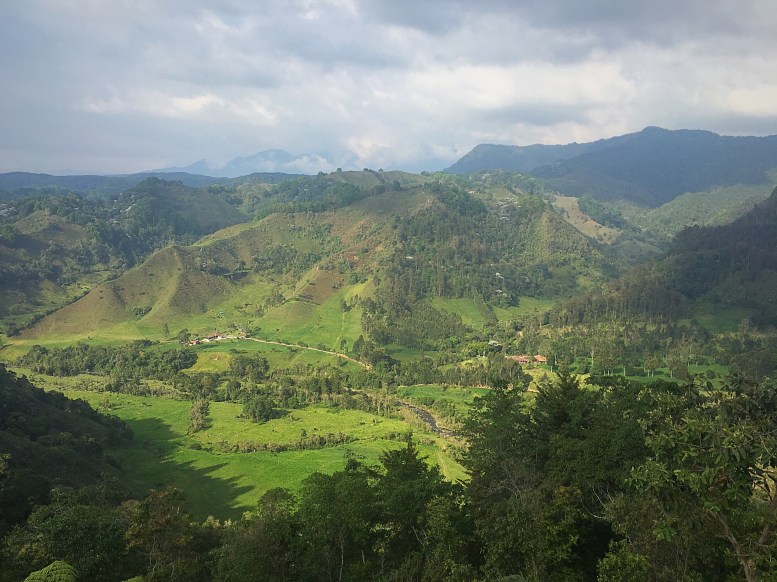
Our guide was the owner of one such finca, a former English gentleman by the name of Tim; a Winston Churchill type complete with accent, cane, and humorous quips, as well as a forward facing vision for the Colombian coffee trade. The tour commenced at a town staple, The Plantation House, with Tim and his half-interested Border Collie shepherding our group of nine wayward strangers down a jagged mountainside and into the exquisite world of coffee.
Much like wine, there are hundreds of varietals of coffee bean, but in Colombia these are classified in only one of two major categories: Arabica – a mildly acidic, but flavorful bean; and Robusta – a more acidic, less flavorful version with a much higher caffeine content. The extra caffeine of robusta beans has lead to their propagation in much of the world’s coffee regions, and to their infiltration of most coffee houses now serving blends of overly caffeinated lesser grade coffees to perpetually wired patrons.
The coffee industry in its current state holds at least two familiar lessons for an interested party.
Lesson one: When an industry gets as large as coffee has you can rest assured big business is involved, and when big business is involved the little guy is no doubt getting screwed.
We have personally noted the difficulty in finding an excellent cup of coffee in the communities where the plant is grown. As it turns out, this is due to the fact that now the coffee bean is a highly commoditized crop. As a result, the defective beans which you can spot floating to the top during washing are scooped off and saved for domestic consumption. This could be an indication as to why most menus offer coffee additives: alongside sugar rich flavorings you can expect to find at least one bottle of baileys, and often its stronger cousins. Add a little liquor and you may fail to notice that the cup you hold in your hands is not such a perfecto tinto of joe.
Lesson two: The old adage, Good things come to those who wait.
So it is with all things in life, once the planting of the coffee bean has taken place, you must patiently wait. The small trees can take up to 5 years to begin producing the bright red and yellow cherries that when opened yield just two green coffee beans (actually seeds). In full swing each tree boils down to about 60 cups of coffee a year.
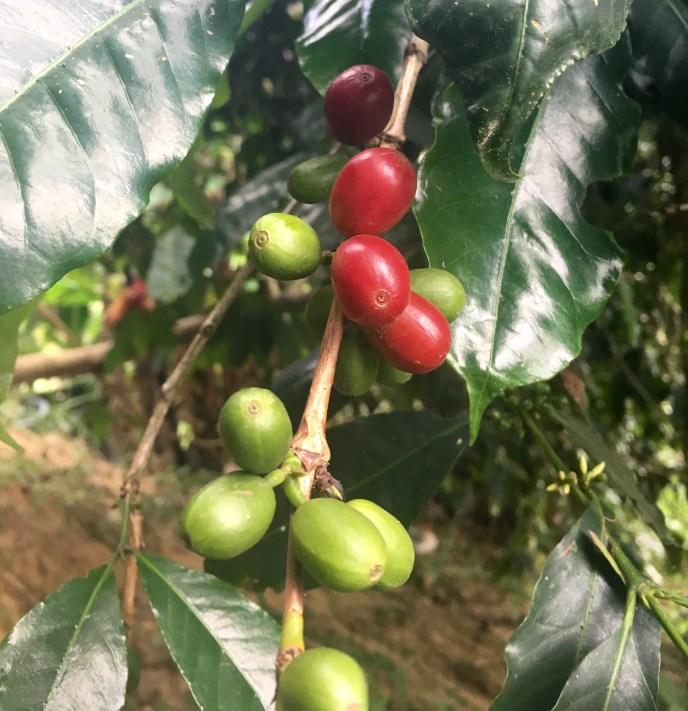
Entire communities come together to harvest, wash, rewash, dry and pack the beans twice a year during the rainiest months. During the harvest many streets and children’s playgrounds cannot be accessed as they make the perfect sun-warmed drying beds for the freshly washed beans. Lo ciento kids, move over the world needs its coffee! In Colombia the precious legumes are only harvested a mano, or by hand, often on the edges of treacherous mountainsides in the pouring rain – an OSHA nightmare. The next time you find yourself in Starbucks picture these men risking their lives, expertly plucking only the most perfectly ripened red cherries at exactly the right moment, ultimately allowing you to enjoy that, “Venti soy quadruple shot no foam macchiato” – aside – “half a pump of pumpkin spice please,” your little selfish pleasure.
Thanks to Tim and other coffee purists, the tides are turning here and local demand for the most beloved and best of beans is growing. That’s right, 100% pure grade A Arabica Colombiana, triple washed of course.
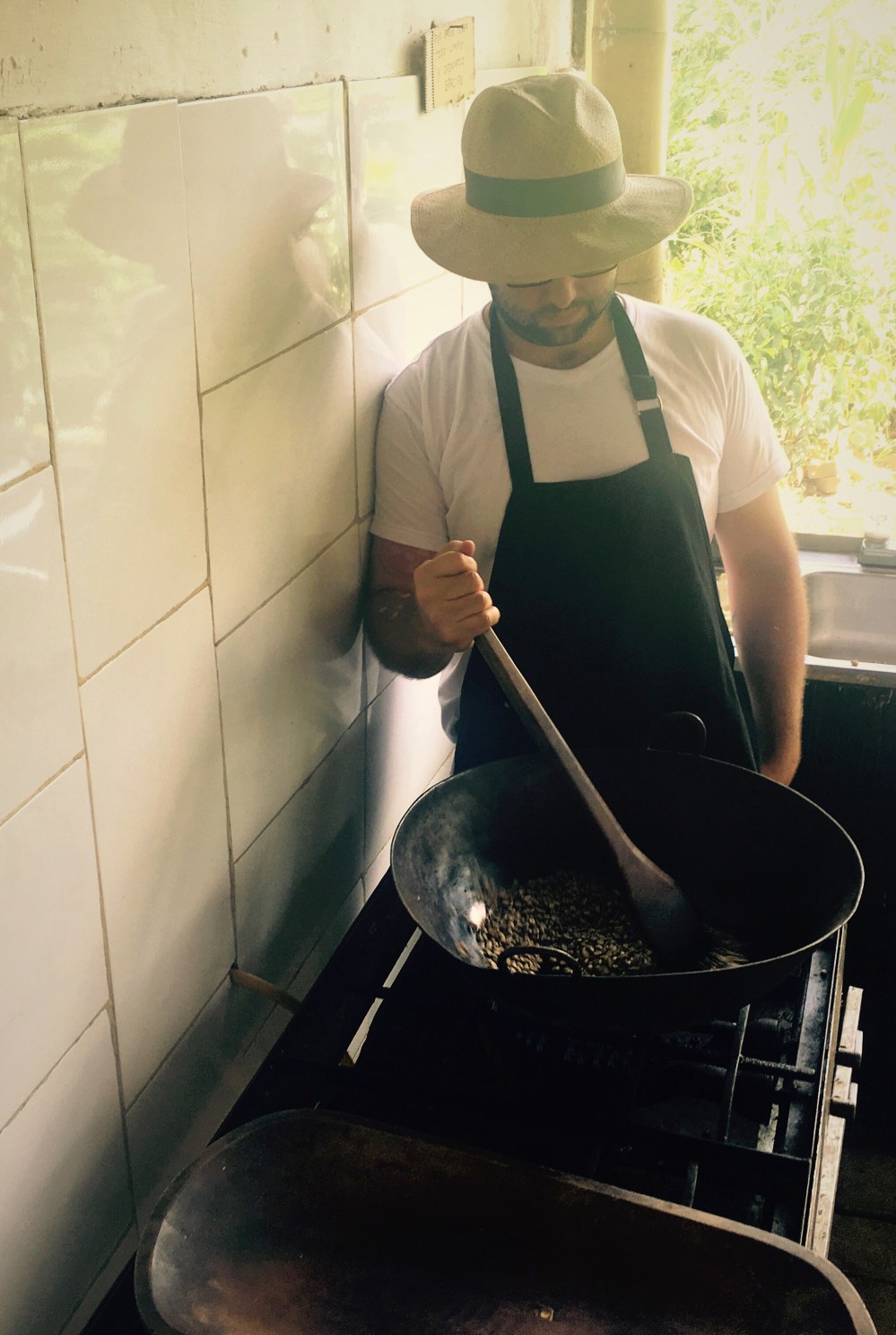
Our tour concluded with a coffee expert processing, peeling, sorting, and hand-roasting a batch of freshly dried coffee beans, grinding them to the perfect consistency the old fashioned way, and brewing the freshest cup of coffee imaginable – straight from the finca to the taza. Our standards have been raised. We’re afraid coffee will never be the same…
Arabica,
There was a time when taza, ground, and bean,
Starbucks and every common cup
To me did seem
Apparelled in celestial light,
The glory and the freshness of a dream.
It is not now as it hath been of yore;–
Turn wheresoe’er I may,
By night or day,
The beans which I once drank I now can drink no more.
– Adapted from Wordsworth
Click the button to check out the updated gallery from our time in Salento.

 We Are Nonlocal