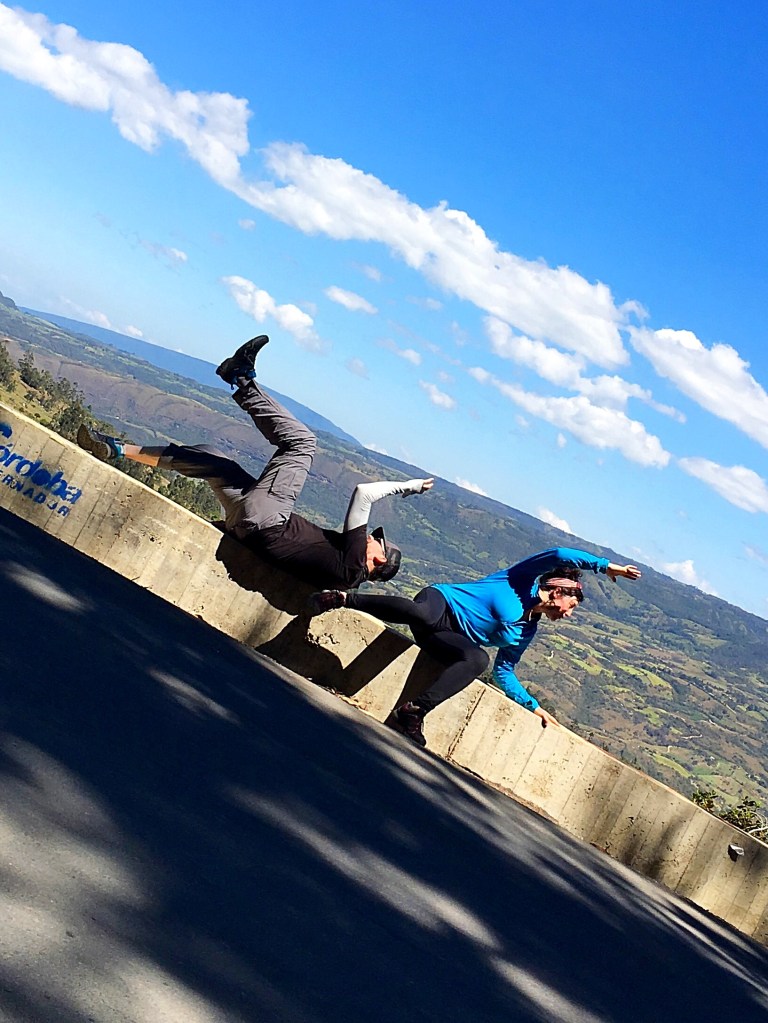
While riding through Punta de Llano, Santa Sofía, Moniquirá, and Barbosa we were warned by locals regarding a potential conflict area and about a section that could present issues for our travels en bici, or on bike. In response, we decided to hop a bus near the base of some of the most considerable mountains in Colombia which would allow us to avoid the dangers whether or not they were actually there.
We were filled with awe and inspiration as we climbed up and over the Cordillera Central, the tallest branch of Colombian Andes whose foremost peak reaches a staggering ~17,500 ft. into the heavens as if to touch the hand of God. The expansive range was at once incredibly vivid and strangely enigmatic. Parallax vistas of colossal giants crept into the murky distance obscured by clouds which rose to the heights from their very sides and painted in stark contrast – dark and light – a living scene that morphed with every twist of the road we travelled. Our driver maneuvered the lumbering autobus with a surgeon’s precision around hairpin turns flanked by dense forests of palm and pine, and sheer rock faces griped tightly by spiraling red fern and thick moss covered vine.
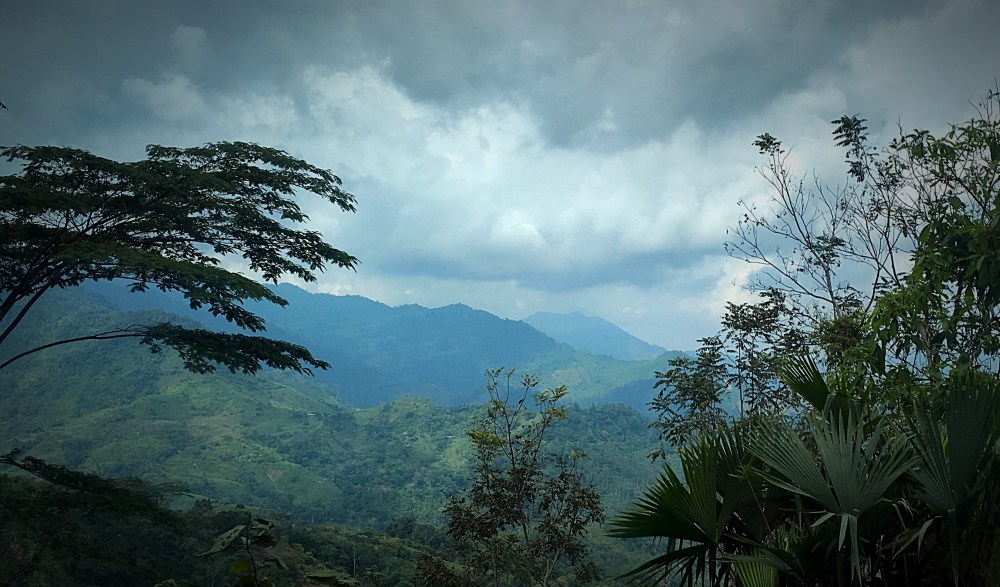
As the road unraveled from its lofty perch the ridge shed its dense foliage and reduced to a boiling sea of mounds swathed in tall grasses stretching to the horizon. Just as quickly as it had come the plano gave way again to the pressure of a shifting crust which folded the earth together at its ends, and we found ourselves climbing into the lap of the country’s third largest city with extra time to explore a place originally considered prime to settle after our tour.
In every direction Medellin overran the surrounding mountains; its will a victor over the natural boundaries of the valley. The metropolis seemed at battle not only with its environment, but with itself. On one hand it promised unrivaled comfort and leisure in certain established and up-and-coming districts. On the other it struggled to provide for a large contingency of its population resigned to its furthest outskirts.
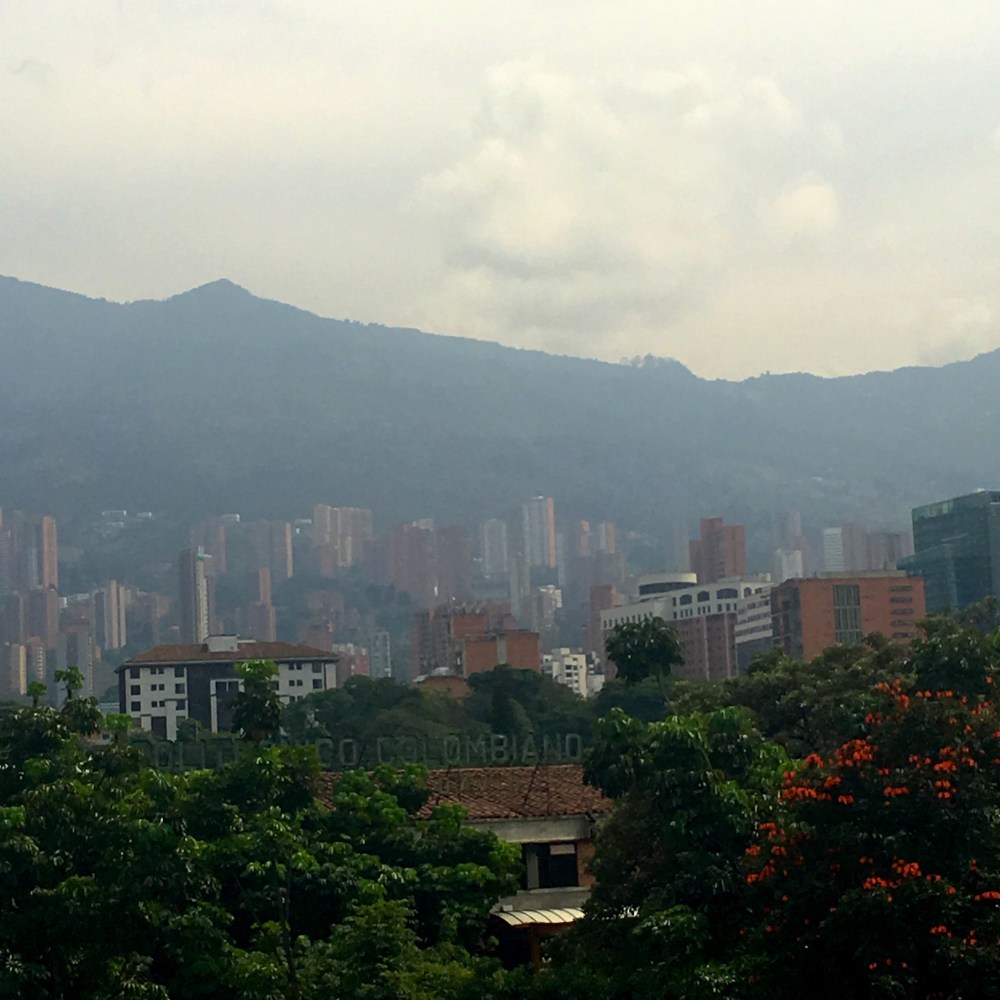
A few neighborhoods stood as testaments to a growing middle class and a draw for investment and tourism. Poblado could have been transplanted directly out of many trendy cities of similar scale in the States; it was a slice of Uptown and came with a price tag to match. Laureles, which Mel and I preferred, was also a tailored section with a slightly less manufactured air, filled with parks and locales to suit the appetites of the many young professionals who reside there.
On a ride in gondolas built for public transport to and from the mountainsides, we realized some areas that seemed to be extensions of the bustling and prosperous city were actually discordant masses of red brick, rusted tin, and cobbled stone which housed a people whose daily rhythm back and forth undoubtedly drove the heart of the sprawling urban center.
The dichotomy in Medellin has emphasized the need for revitalization and the city has responded through award winning municipal projects and innovative infrastructure, contemporary even to the most modern of which exists in the States. The days of Pablo Escobar and an overwhelming narco presence are as distant as the mafias chokehold on New York. OK, sure there are still areas that should be avoided, but in what big city is that not the case? The point is that real change seems not only possible, but imminent and tangible there. As we look back, that fact brings about a sense of hope and appreciation for the city and the people within that cannot go unmentioned.

Click on the button below to view images detailing this leg of the journey.

 We Are Nonlocal