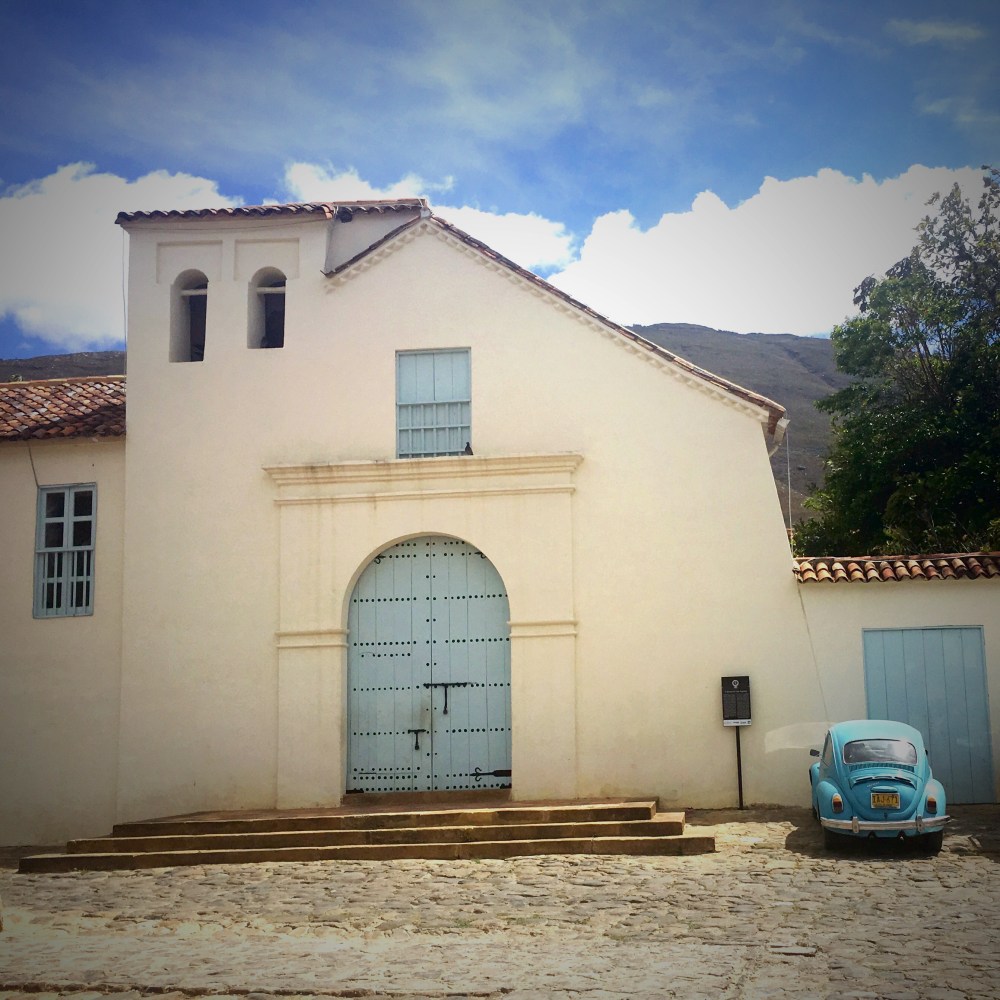
Paving the way to the center of this enchanting village were roads of large cobblestone distressed to varying shades of mocha over five hundred years of exposure and patronage.
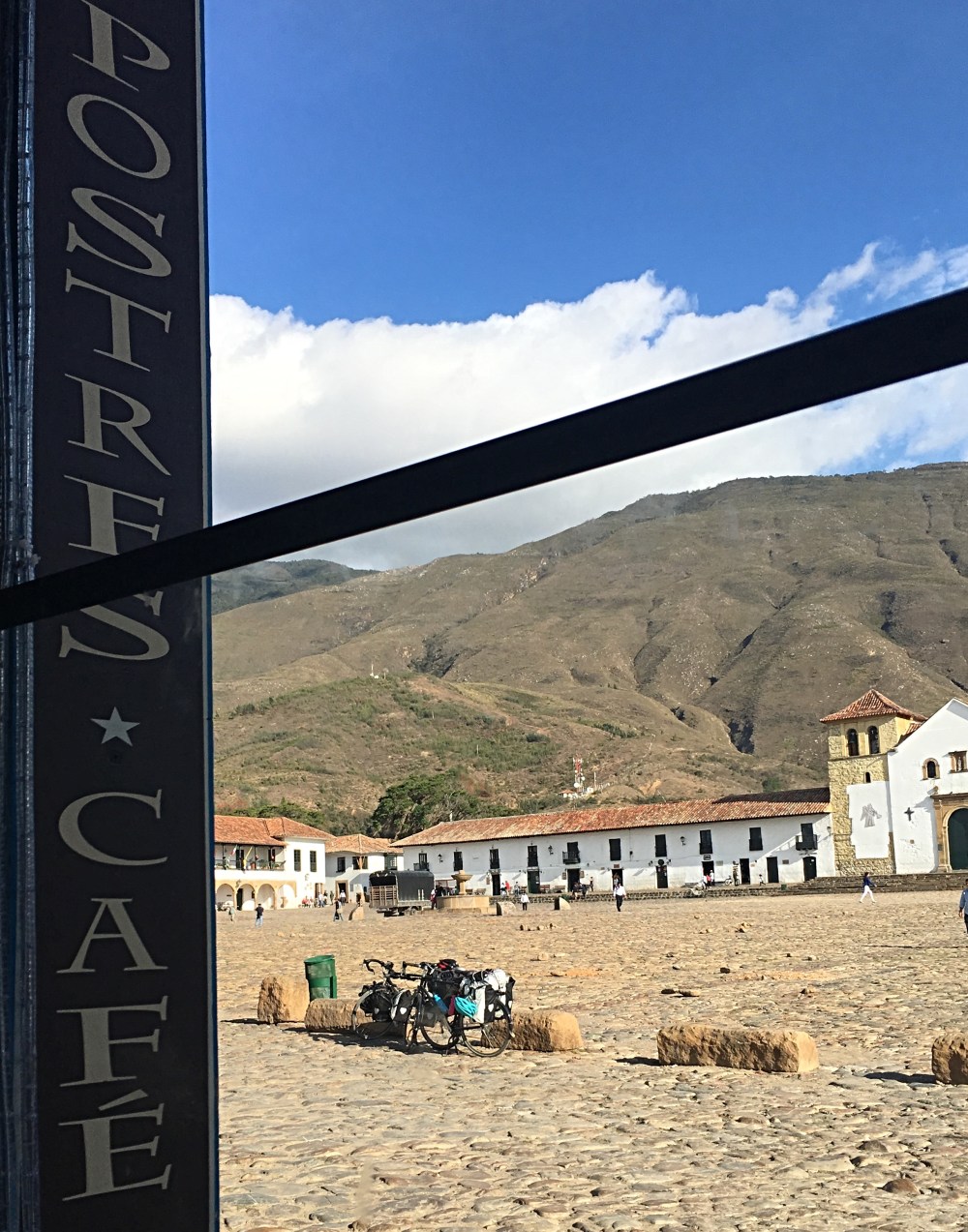
With bikes bumping and bags banging we pushed our way to the “largest plaza in Colombia,” Plaza Mayor. Gazing outward from its center felt as if we had been transported to the set of an old western at high noon. I fully expected a tumbleweed to roll by at any moment. A few locals multiplied into many touristicos as we passed the heat of the day in a quaint cafe and library overlooking the historic church at the head of the plaza. The lure of white stucco colonial buildings with breezy courtyards and red tile roofs dripping with bougainvilleas pulled visitors through winding passageways and into a place where time seemed to have frozen. Exotic fruits and artesian wears beckon foreigners to part with their recently exchanged pesos.
Unfortunately for Matt, one too many jugos naturales made with fruit and water lead to a serious case of “traveler’s stomach” for lack of a non-offending term. Luckily, this meant three days of exploration in this city steeped in rich history of struggle for Colombian independence. Simon Bolivar lead forces to a very important victory here, and this was the hometown of a gallant general, Antonio Ricaurte, who died in a “famous act of self sacrifice” aiding the country in its fight.
We found solace for Matt’s stomach in Movimiento de Viento, a small crystal shop where the free-spirited Argentinean owner offered us coca tea sourced from his indigenous friends in the high Andes while he played guitar and sang away our troubles. We did not explore the many natural wonders of this area, but heard of 7 waterfalls, a hike to a mystical lagoon, and an ancient stonehenge-esque astronomical observatory.
Both feeling rested we pushed on toward Santa Sofia, running into our Colombian caballero two more times on our way out of town. Like a guiding light, he assured us we were on the right path.
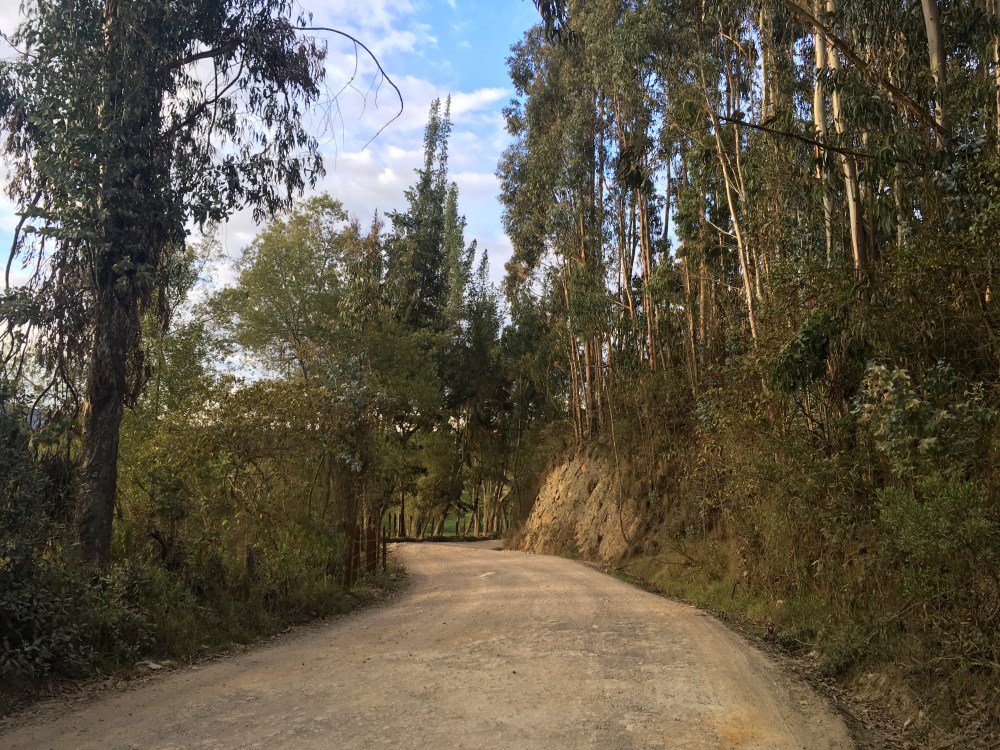
When strangers inquired “adonde vas?” we learned not to trust those who made whistling sounds and down hill hand gestures. The first ten miles were downward sloping, but were quickly followed by an uphill battle lasting until dark. As dusk faded, we came to a dirt road with a sign promising a modern astronomical observatory. We took our chances when a couple told us we could camp. Another mile down the pitch-black deserted road, we came upon the observatory where we found in fact one could not camp, but the old man running the place was very kind in pointing us a little further down the road to his neighbor, Doña Lola, and her hospedaje. We dinned on a feast of yard eggs, potatoes, green beans, and juice from a “tree tomato” until we could eat no more. Lola’s family showed us through twists and turns, around propped up pieces of tin, chicken coops, low hanging clothes lines, and water wells until finally the backyard opened to reveal something of a star-gazers dream. Another tented couple, Rita and Javier from Bogota, had set up a telescope and kindly proceeded to share their view and knowledge of all things celestial in the Southern Hemisphere. Javier, a computer engineer by trade, patiently guided our gaze toward the Andromeda Galaxy as well as several constellations our eyes had never so clearly seen take form.
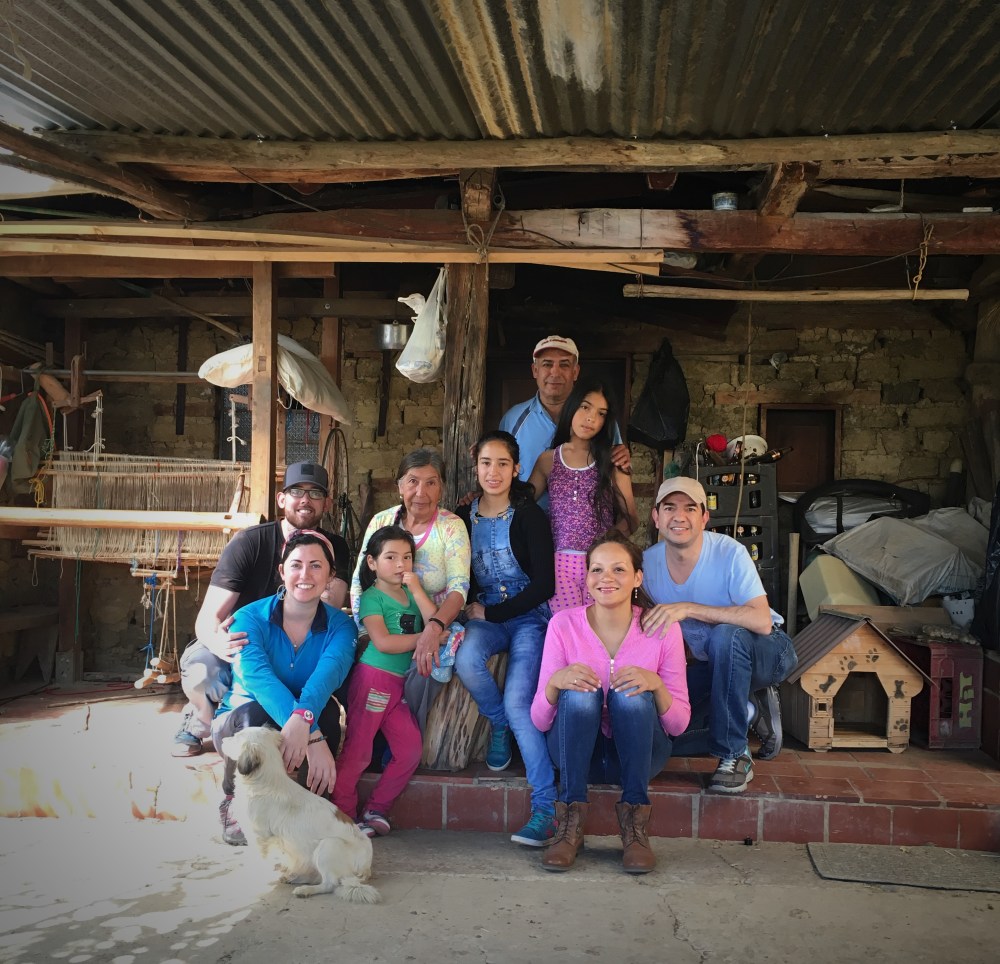
The next morning we were treated to a breakfast of bread, queso, and potato soup, after which Doña Lola showed us how she used her handcrafted loom and bicycle wheel to spin lamb’s wool into the most practical of garments as chickens and dogs ran underfoot. While packing the tent, I came across an ancient Amonita, a fossil from a time when the surrounding mountains were under the ocean. Apparently, many shelled creatures and several intact swimming dinosaur fossils have been found in this area. I gave the fossil to Javier as a small token for sharing his passion for astronomy, and we headed on our way to Barbosa with grins on our faces.
To see more pics from this beautiful area, check out the button below.

 We Are Nonlocal