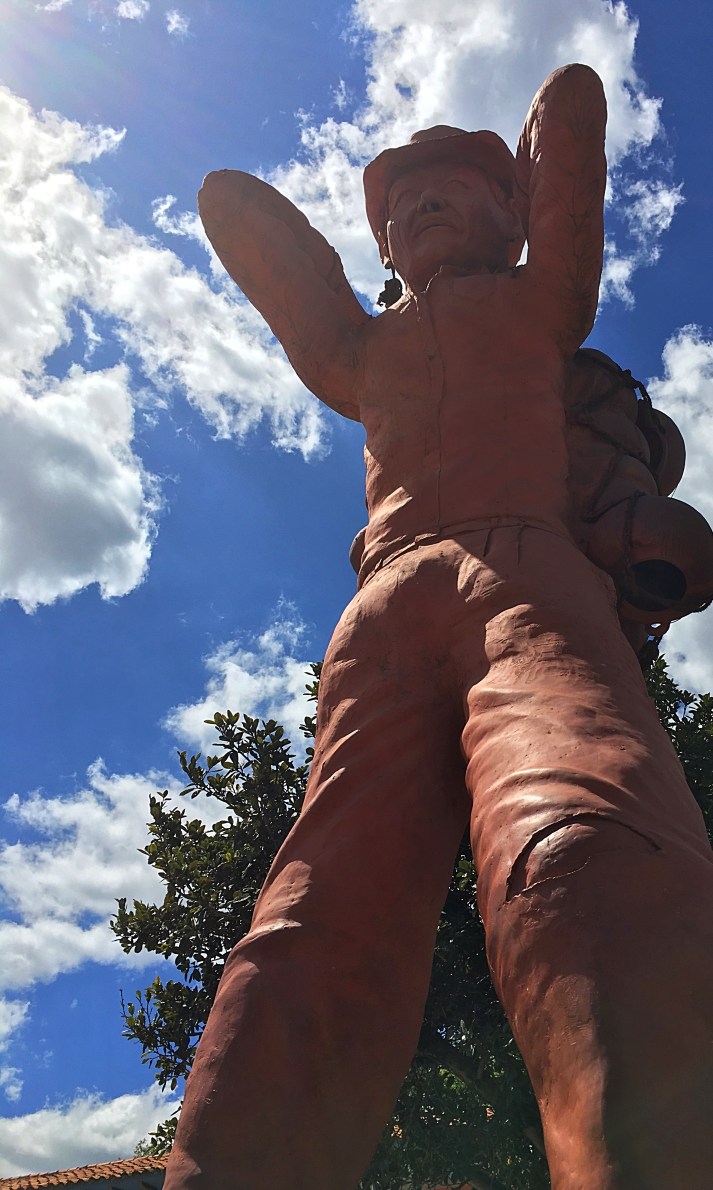
After exploring Ráquira (translated city of pots), the terra cotta Capitol of Colombia whose history is depicted with larger than life earthen figures in the town square, we started down a road the same reddish-brown, its potholes leveled with the remains of fractured bowls and vases, toward Villa de Leyva.
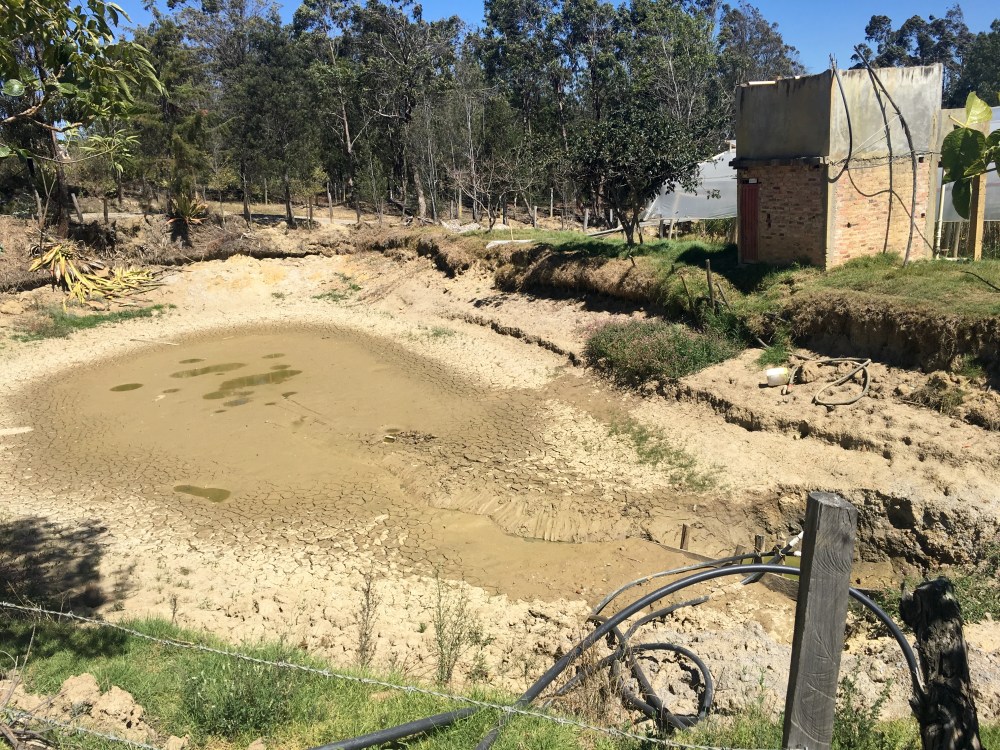
The route brought us through a region known for tomatoes that had been stricken with drought for well over a year. A ground once quenched now cracked and peeled, yielding to a blistering sun. Farm gates once towering trellises for flourishing Bougainvilleas and Geraniums now shriveled to gnarled silhouettes desaturated of color save signs calling out Se Vende, For Sale. A generation of tomato farmers either turned away out of pure necessity or began to look deeper for answers through the use of stand-up greenhouses or complete revisions of their land; trading in nutrient rich top soil for gravel and grapes.
A new culture of wine is emerging in the area. It is young relative to those in France and Australia, or even Chile and Argentina, but due to a temperate climate the growers are able to make up time cultivating four harvests a year compared to just one elsewhere. Teams of meteorologists, horticulturists, farmers, master growers, and wine experts work together tailoring traditional technique, replicating seasonal conditions of more optimal climates, and rapidly iterating in an attempt to create something totally new and completely Colombia’s own.
The winding route which unfolded the tale of the region, past and present, intersected a stretch of modern highway leading to Villa de Leyva upon which we turned to face yet another climb. We pushed to a lookout point high on the back of a ridge; the perfect place to appreciate this opportunity and the beauty with which we were surrounded.
Enveloping us was a mountain-scape laying open an expanse of earth and sky, the clouds of which seemed a frothing ocean reflecting a coast line of peaks and trees; a picturesque scene if viewed from a perspective unbound by the laws holding us upright and to the ground.

After a quick break we returned to the mountain road, pushing up and around each bend that seemed to produce the next just as we reached its crux, again and again until dusk. When we made the top of the trail and stopped to catch our breath, we turned to see a sign advertising camp just a few thousand meters down a steep rocky path which stretched around monolithic red boulders standing guard over the passage.
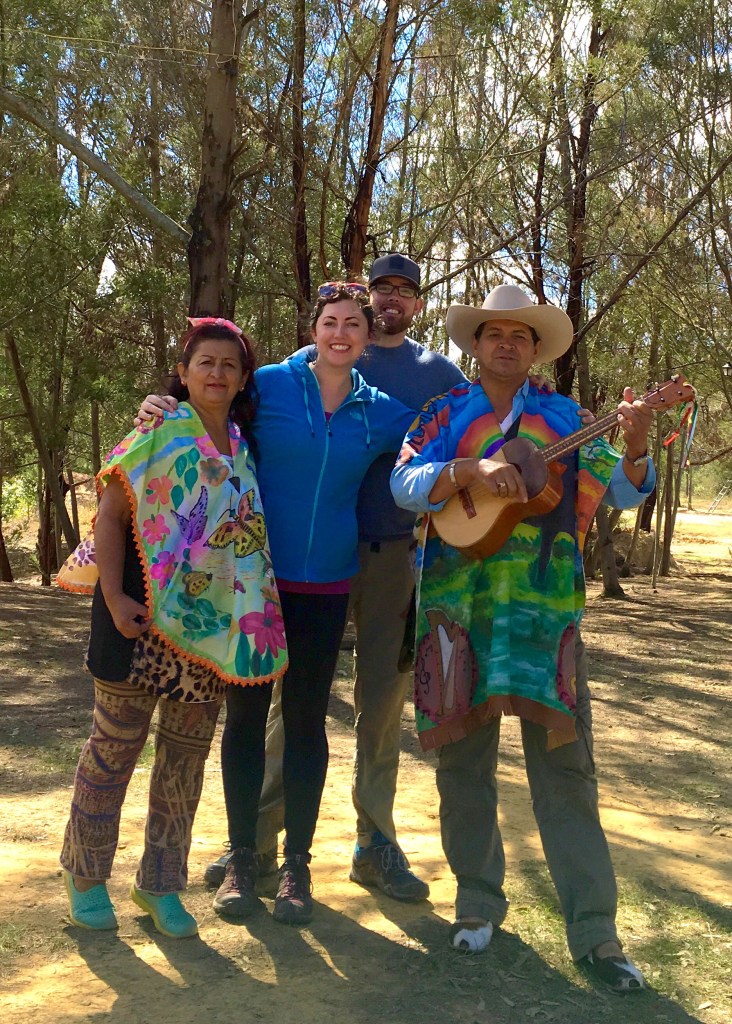
At the bottom we were surprised to meet a pair of what one might call Colombian hippies. The couple who owned the place, “Zona de Camping,” were artists and musicians offering a rainbowed assortment of hand-painted ponchos and lyrical amusement. They welcomed us with open arms and prepared a fire to cut through the cold and light our way as we set up camp.
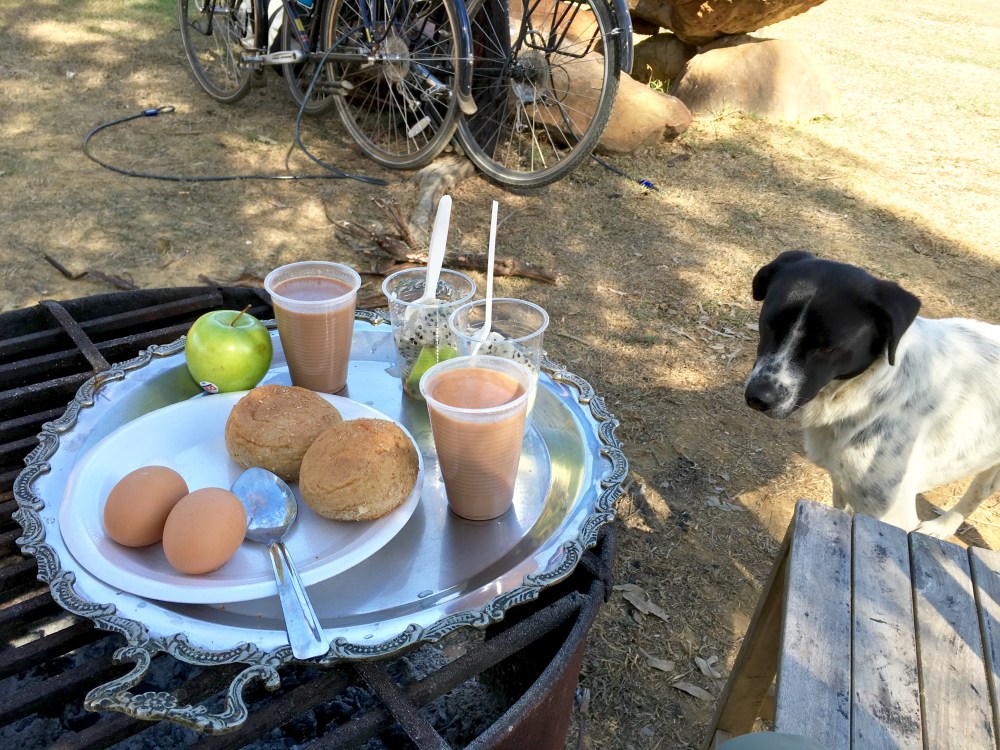
In the morning they stopped everything to prepare breakfast; a feast of eggs, fruit, coffee, chocolate, and bread served on a silver platter. They proudly displayed several ponchos and crafts intricately hand painted by the misses, and excitedly discussed the stars of the previous night. Finally, the man seemingly produced out of thin air a small, well cared for guitar that appeared to be strung with plastic wire spiraling tightly from its tuning pegs. He forcefully strummed the instrument several times before belting out what Mel referred to as a fiery Colombian caballero classic to guide our travels. It was impressive to say the least, and a perfect way to punctuate our departure.
After several hugs and good wishes we started on our way, but before we could reach the highway we were reunited with the man who decided to accompany us the rest of the journey on a bike of his own. The three of us rode down into Villa de Leyva together, the man heading up the pack and waving in acknowledgment to many of the town’s people as we passed. When we reached the town center we parted ways again, grateful for the time we were given and for their generosity.
Click below to check out our phots from Ráquira to Villa de Leyva.

 We Are Nonlocal